
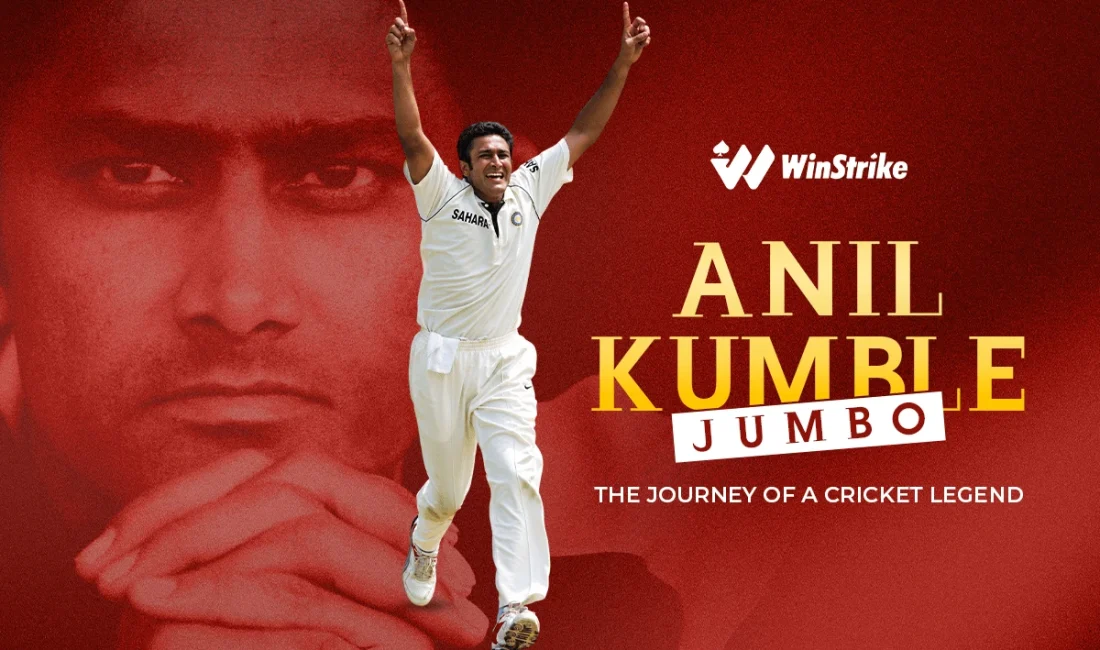
Anil Kumble was one of India’s most recognizable international cricket players. He played for India from 1990 until 2008, taking wickets using his reliability, bounce, and patience. Anil became India’s highest wicket taker in both Test and One Day cricket.
This Anil Kumble biography is about his early life, family background, education, cricket achievements, leadership qualities, and his coaching career. His style of bowling was not like most other spinners’. He usually bowled with more pace and bounce to give a hard time to the batsmen.
In February 1999, Anil Kumble made history in cricket in Delhi. He took wickets of all ten batters of Pakistan in one innings of a Test match, which only a bowler had done before. Jumbo was another name associated with Kumble.
After leaving international cricket, Kumble stayed connected with the sport as a coach and administrator. He coached the Indian team and worked with IPL franchises. His long career earned him recognition among the legends of cricket and the legends of cricket in India.
Cricket followers using platforms such as Winstrike can also learn about India’s cricket history through records and stories from players like Kumble.
Here are the main details of Anil Kumble Biography and his cricket career.
Detail | Information |
Full name | Anil Radhakrishna Kumble |
Nickname | Jumbo |
Date of birth | 17 October 1970 |
Birthplace | Bengaluru, Karnataka, India |
Height | Commonly reported as 6 feet 2 inches |
Batting style | Right-handed |
Bowling style | Right-arm leg spin |
Playing role | Bowler |
ODI debut | 25 April 1990 against Sri Lanka |
Test debut | 9 August 1990 against England |
International career | 1990 to 2008 |
Test matches | 132 |
Test wickets | 619 |
ODI matches | 271 |
ODI wickets | 337 |
International wickets | 956 |
Test captaincy | 2007 to 2008 |
International retirement | November 2008 |
Major awards | Arjuna Award, Padma Shri, ICC Cricket Hall of Fame |
The Anil Kumble height in feet is commonly reported as 6 feet 2 inches. Fans also know him by his nickname, Jumbo. As an Anil Kumble cricketer, he made his name mainly through his bowling.
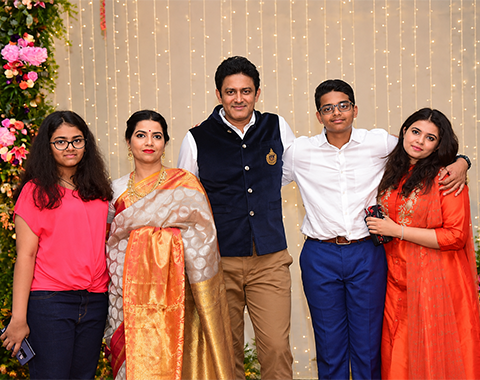
Anil Kumble was born on 17th October 1970 in Bengaluru, Karnataka. Anil came from a family that supported his education and helped him develop a love for cricket. Like most children who start to play the game, he first played cricket by participating in matches with other kids.
Anil got his first taste of the game playing tennis ball cricket. Later on, he started playing in school cricket tournaments.
Kumble first bowled medium pace. At around 15, he switched to leg spin after his elder brother, Dinesh, encouraged him to try it. The alteration assisted him in discovering the bowling technique that he was to adopt in his career.
He kept practicing and worked on controlling the ball. He learned to make batters play difficult shots instead of depending only on turn
Kumble graduated from his schooling in Bengaluru and joined National College in Basavanagudi. After this, he pursued his studies in mechanical engineering from RVCE.
He managed his studies alongside cricket training and domestic matches. Completing his engineering degree gave him an academic background outside the sport.
Kumble was called up for Karnataka’s senior cricket side for the season of 1989-1990. Through consistent performance in domestic cricket, Kumble managed to catch the attention of the selectors and soon found himself playing international cricket.
He progressed by way of consistent practice and match play. He focused on improving his lines, lengths, and bowling stamina. Such attributes proved very helpful when it came to the longer format of test games.
Through education and early cricket experiences, Kumble paved his way into an almost two-decade career in cricket. The Anil Kumble Biography traces his journey from Bangalore to the highest levels of international cricket.
Kumble represented the team of Karnataka in domestic tournaments, such as the Ranji Trophy tournament. It was through these games that he gained valuable exposure to experienced batsmen.
He also played county cricket in England. Northamptonshire signed him for the 1995 season, when he took 105 first-class wickets. His performances brought him recognition in English cricket.
Kumble later played for Leicestershire and Surrey. These county teams gave him experience with different pitches and playing conditions.
Wisden named him one of its Cricketers of the Year in 1996. The honour followed his strong performances in county cricket.
Kumble made his ODI debut against Sri Lanka on 25 April 1990. He played his first Test against England at Old Trafford on 9 August 1990.
Cricket at international level gave him stiff competition. Batting players attempted to make runs against him; hence, he used to vary his speed and line with each game.
He was becoming an integral part of the bowling attack in India. He was supposed to keep the scoring rate in check and apply pressure along with the fast bowlers.
The captain appreciated his capability of bowling long spells without losing his composure. He had a very good line and length, which made it tough for the batters to score easy runs.
Early career statistics in Anil Kumble Biography set up the foundation of the records he was to create later.
Kumble made his debut for Test cricket way back in 1990 and played till 2008. He had played a total of 132 Tests and took 619 wickets in Tests, which is a record for an Indian bowler.
He would exploit the elements of accuracy, bounce, and patience to unsettle the batsmen. While playing in India, he would exploit the uneven surfaces of the Indian pitches to create opportunities as matches went along. Abroad, he would change his length and pace to suit the pitch.
Kumble played alongside leading Indian cricketers such as Sachin Tendulkar, contributing to India’s bowling attack during a successful period in international cricket.
Statistic | Record |
Matches | 132 |
Wickets | 619 |
Bowling average | 29.65 |
Best innings figures | 10 for 74 |
Best match figures | 14 for 149 |
Five-wicket hauls | 35 |
Ten-wicket match hauls | 8 |
Runs scored | 2,506 |
Highest score | 110 not out |
Kumble ended up among the best wicket-takers in Test cricket throughout the world. The eight ten-wicket match performances by Kumble indicate how effective he was in influencing the games.
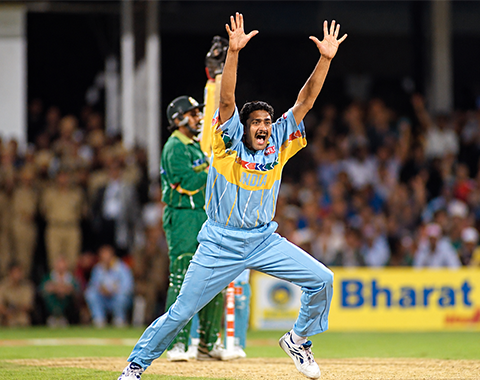
Kumble’s best known bowling performance was against Pakistan in Delhi in February 1999, when he took ten wickets in the second innings of Pakistan to finish with figures of 10 for 74.
He became the second bowler in Test history to dismiss every batter in an innings. England’s Jim Laker had done the same against Australia in 1956.
Kumble kept bowling accurately and put Pakistan’s batters under pressure. India won the match, making the performance even more memorable for cricket fans.
This innings remains one of the defining moments in Anil Kumble test cricket. It strengthened his place among the legends of cricket.
Kumble played in 271 ODIs for India and bagged 337 wickets. The best bowling performance of Kumble in ODI was taking six wickets by giving only 12 runs.
He used to bowl mostly in the middle overs when the teams were trying to play positive cricket. Tight lines and lengths of Kumble prevented batsmen from making easy runs.
Kumble was a player in the Men’s Cricket World Cup in 1996, 1999, and 2003 in India. However, Kumble’s best game in the World Cup took place in 1996 during which he took 15 wickets in seven matches to become the highest wicket taker in the series.
The ODI bowling average of Kumble was 30.89 and five-wicket hauls in the limited-over format were two. He provided economy and control to India to stop the run rate of opposition.
Anil Kumble ended his career with 956 wickets in Tests and ODIs.
Anil Kumble bowling technique was that of fast and accurate leg-break bowling. He could bowl at faster speeds than most other leg spinners of that time.
His ball would not necessarily break. However, his bounce and consistency in line were enough for him to make the batsman take precautions while batting.
Kumble changed his approach to suit the pitch and the batter. Dry surfaces often helped him use bounce and rough areas. On different surfaces, he depended on his accuracy and discipline.
His technique was highly effective in ODIs, where he would restrict the runs. As for Tests, his fitness level enabled him to bowl lengthy spells and put the batsmen under constant pressure.
According to Kumble, spinners do not have to have quick turns for taking wickets. His abilities, fitness, and understanding of the game made him one of the best bowlers of India.
While Kumble’s primary expertise lay in bowling, he was no slouch when it came to scoring runs. Kumble amassed 2,506 runs in Tests and 938 runs in ODIs.
His highest Test score was 110 not out while playing against England at The Oval in 2007. In this innings, Kumble played his only century in Tests and contributed some valuable runs to India.
The batting record of Anil Kumble in Test matches consists of five Test half-centuries. It was because of his position in the lower order as a batsman that such skills were needed.
In ODIs, Kumble’s batting record was not impressive. His highest ODI score was 26 while he scored 938 runs in all ODI matches.
Though Kumble wasn’t a great batsman, his Test century proved that he could contribute to the team even with his bat.
Anil Kumble career statistics give us a look into his contributions towards Indian cricket in two different international formats. He concluded his international career in 2008 after 18 years with India.
Statistic | Record |
Matches | 132 |
Wickets | 619 |
Bowling average | 29.65 |
Best innings figures | 10 for 74 |
Best match figures | 14 for 149 |
Five-wicket hauls | 35 |
Ten-wicket match hauls | 8 |
Runs scored | 2,506 |
Highest score | 110 not out |
Statistic | Record |
Matches | 271 |
Wickets | 337 |
Bowling average | 30.89 |
Best bowling figures | 6 for 12 |
Five-wicket hauls | 2 |
Runs scored | 938 |
Highest score | 26 |
Record | Total |
Test wickets | 619 |
ODI wickets | 337 |
Total international wickets | 956 |
Test appearances | 132 |
ODI appearances | 271 |
International formats | Tests and ODIs |
Kumble’s 956 international wickets came from years of consistent performances. His records secured his place among the legends of cricket in India.
This can be clearly seen from his performance in Tests and ODIs. His Test matches gave him plenty of time to create pressure, while ODIs required him to score runs in a certain number of overs.
Kumble’s father, Radhakrishna Kumble, worked as a management consultant. His family supported his studies and cricket training while he was growing up.
His elder brother also helped shape his cricket journey by suggesting that he try spin bowling. That advice became an important moment in his early development.
Kumble has generally kept his family life private. Public biographical accounts report that he has three children with his wife, Chethana Ramatheertha.
School matches and local competitions gave Kumble regular chances to improve. He faced different batters and learned to change his approach when his usual deliveries did not work.
Later, he became part of Karnataka’s domestic cricket circuit. His achievements in that circuit enabled him to get experience for becoming a professional cricketer.
Anil Kumble life journey reveals how practice and family contributed to his improvement as an athlete. His career developed gradually, from playing at the local level up to the international level.
Anil Kumble played three men’s ODI World Cups in India, those being 1996, 1999, and 2003. Through these World Cups, Kumble had an opportunity to play against some of the best batters in the world.
The best World Cup performance by Anil Kumble is his 1996 World Cup. He got 15 wickets in seven matches and emerged as the top wicket taker of the World Cup. With his bowling, India broke opposition teams and formed good partnerships.
The tournament experience increased further in 1999. In 2003, he was included in the Indian squad that reached the World Cup final but lost to Australia.
As he gained experience with time, his role as a player changed as well. In 1996, he became a renowned wicket taker, while in 2003 he had become an experienced player for India.
Kumble stepped into the shoes of India’s Test captain in November 2007 when Rahul Dravid retired. Before becoming captain, Kumble played under different team leaders, including Sourav Ganguly, and gained experience in international team leadership.
India won three, lost five, and drew six Tests in the 14 Tests that Kumble captained. Some of the memorable wins of Kumble’s reign include India’s Test win against Pakistan on Indian soil in 2007.
Kumble leadership style was based on preparation, discipline, and cooperation. As a bowler, he was aware of how to bowl a long spell and how to pace his players.
Leadership of a team required many other duties including selection of players, making bowling changes, and strategy. Kumble had to balance being on the playing field with his responsibilities as a team leader.
Kumble led India during the period that saw both experienced players and new blood in the team. This is despite the short time that he served as India’s captain.
Kumble retired from international cricket in November 2008.
The nickname Jumbo became closely linked with Kumble during his playing career. One widely reported story credits former Indian cricketer Navjot Singh Sidhu with giving him the name during an Irani Trophy match.
According to this account, Sidhu called him Jumbo Jet after seeing the bounce of his deliveries. The word Jet was later dropped, leaving Jumbo. Kumble also discussed the story during a fan interaction in 2016.
His speed and bounce earned him the name. He was approximately 6 feet 2 inches tall, which made him impressive at the bowling crease.
His teammates, media personalities, and supporters continued to refer to him by this nickname throughout his entire life whether as player, captain, or coach.
The Anil Kumble Nickname, Jumbo, became his public identity. His accurate and bouncy bowling used to worry the batters irrespective of the spin.
Kumble was a player for Royal Challengers Bangalore in Indian Premier League (IPL). He played 42 games in the IPL and captured 45 wickets.
His most memorable performance in IPL as a bowler came against Rajasthan Royals in the year 2009 where he had taken five wickets for five runs.
He led Royal Challengers Bangalore team in 2009. He successfully led his team to the finals of the league but lost the final match.
His international experience helped him handle the pressure of a short tournament. The IPL also brought him together with players from different countries and cricket backgrounds.
After retiring as a player, Kumble moved into mentoring and coaching. He worked with Royal Challengers Bangalore and Mumbai Indians in mentoring roles.
He later joined Punjab Kings as head coach and director of cricket operations from 2020 to 2022, adding to his experience among the legends of cricket.
He was responsible for coming up with plans for matches and assisting the team and the individual players to get prepared for their matches.
Kumble worked in several IPL roles, including player, captain, mentor, and head coach. These jobs gave him different views of franchise cricket.
As a player, he handled pressure on the field. As a coach, he helped prepare players and review team performances.
For readers following cricket through Winstrike, his IPL journey shows how a former international player can move into team management and coaching.
Kumble was selected for coaching India’s cricket team in the month of June 2016 by the Board of Control for Cricket in India.
He planned the training, match preparation and communicated with the players. Moreover, he collaborated with the support team members in preparing the team for the international games. India had good results with the Test cricket and maintained its position at the ICC Test rankings during his coaching tenure.
Kumble resigned in June 2017 after the Champions Trophy. It has been reported that there was a rift between him and the captain of the Indian team, Virat Kohli.
As a coach, Kumble moved on from being a wicket taker to training the team in competing and helping the players develop themselves.
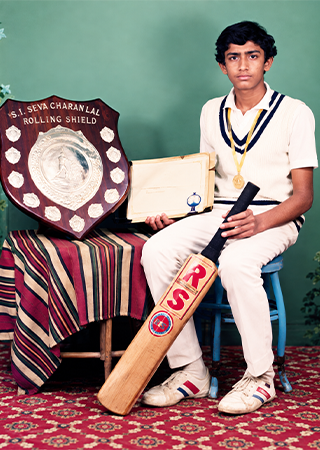
Kumble received several honours for his contribution to cricket. The awards recognized his performances and his place in Indian sport.
Award or honour | Year |
Arjuna Award | 1995 |
Wisden Cricketer of the Year | 1996 |
Padma Shri | 2005 |
ICC Cricket Hall of Fame | 2015 |
Kumble received the Padma Shri in 2005, one of India’s civilian honours. The ICC inducted him into its Cricket Hall of Fame in 2015.
These Anil Kumble awards recognize his achievements at different stages of his career. His contribution to Indian cricket continues to inspire the legends of cricket in India.
Kumble married Chethana Ramatheertha in 1999. Public biographical accounts report that they have three children. He has generally kept his family life private.
He studied mechanical engineering while building his cricket career. His education gave him an interest outside sport, even as cricket became his profession.
When he finally quit playing international cricket in 2008, he got into coaching and mentoring. He was also involved in cricket management.
His work changed from preparing for matches as a player to helping teams and younger cricketers prepare for competition. He also took on leadership responsibilities with national and IPL teams.
Anil Kumble personal life history comprises his education, his family, and his extended career in cricket. Even as he is still a public figure, he has ensured that much of his personal life has remained out of the limelight.
Anil Kumble life history originated in Bengaluru; there, he found out his passion for cricket by playing local games. At first, he started to play with tennis balls and graduated to the level of school and finally the level of Karnataka domestic cricket.
His professional career started in 1990 and continued for 18 years during which time he took 619 wickets in Test and 337 wickets in ODI for 956 wickets overall in international career.
His ten wicket haul against Pakistan in 1999 became probably the most famous achievement of his career. He also took part in three World Cups and even led Indian national team in Test Cricket.
After his retirement in 2008, he was working as coach and mentor. He held the position of India national team coach as well as IPL teams coach (Punjab Kings).
Anil Kumble’s legacy does not consist only of numbers. He became known for his discipline, endurance and ability to maintain his line and length during critical periods of the game.
To sum up, Anil Kumble biography will be useful for people interested in studying the legendary players of Indian cricket.
The Anil Kumble Biography on Winstrike highlights several achievements from his international career.
This includes his records from being a bowler, captain, and coach. These records have played a very important role in Indian cricketing history.
Anil Kumble is an Indian cricketer who has represented India in international cricket and has served as the captain of the Indian Test team.
Kumble has worked in coaching, mentoring, commentary, and cricket administration since retiring as a player. His last major IPL head coaching role was with Punjab Kings, where he served from 2020 to 2022.
Anil Kumble played 132 Test matches for India between 1990 and 2008. He took 619 wickets during his Test career.
Anil Kumble represented India in three ODI World Cups. He played in the 1996, 1999, and 2003 editions.
He played county cricket for Northamptonshire, Leicestershire, and Surrey in England. The experience gave him a chance to bowl in different conditions.
Anil Kumble took 956 wickets in international cricket and claimed all ten wickets in a Test innings against Pakistan in 1999. He also captained India and coached the national team.
He bowled right-arm leg spin. His main strengths were accuracy, pace, bounce, and variations such as the googly and top spinner.
He took 619 wickets in 132 Test matches. His best innings figures were ten wickets for 74 runs against Pakistan in Delhi in 1999.
His major honours include the Arjuna Award in 1995, Wisden Cricketer of the Year in 1996, Padma Shri in 2005, and induction into the ICC Cricket Hall of Fame in 2015.
His highest Test score was 110 not out against England at The Oval in 2007. He mainly played as a bowler but also contributed runs.
Kumble’s professional cricket career relied on the use of his precision in throwing the ball, as well as being patient and hardworking. The former cricketer rose to fame from being a cricket player in Bengaluru to being India’s most successful Test and ODI wicket-taker.
The captaincy of Anil Kumble included his role as the captain of India, played in world cups, and he was even a coach in his retirement period. This was because these positions enabled him to pass his knowledge to other players.
The above Anil Kumble Biography gives a brief summary of his life, from being a young cricket player to record-breaking performances in the cricket world.