
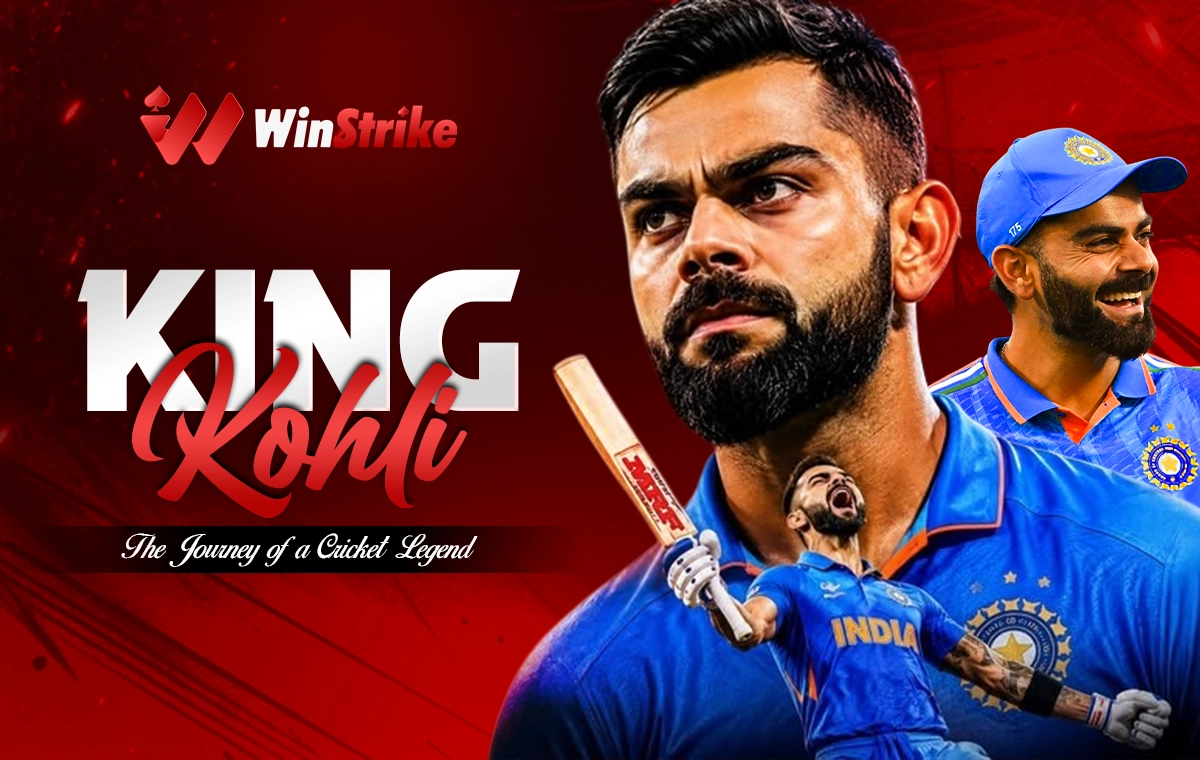
Some cricketers ease into the game. They arrive like a soft note, barely announcing themselves. Others walk in carrying something closer to static electricity, a charge you can feel before they’ve even taken guard. Virat Kohli was always the second kind. You didn’t need a coaching badge to sense it. The way he tapped his bat between deliveries. The way he stared down bowlers twice his age and twice his size. None of it suggested a boy with small ambitions. This Virat Kohli biography follows that ambition from his early days in Delhi to the biggest stages in world cricket.
The Virat Kohli biography starts in Delhi. It doesn’t stay there long. It moves across continents and stadiums, through heartbreak and through nights that still get replayed on television whenever a producer needs filler between overs. It’s Virat Kohli life story: a kid who refused to be ordinary, a man who refused to slow down, and a competitor who never quite accepted that the game had limits worth respecting.
Platforms like Winstrike would spend years obsessing over his numbers later — the chases, the strike rotation, the second-innings averages, all of it. But numbers never fully explained him. Kohli didn’t just play his cricket. He lived it, visibly, on every ball. That’s where the complete Virat Kohli biography begins. For anyone reading a detailed biography of Virat Kohli for the first time, those early years explain much of what came later.
Field | Details |
Full Name | Virat Kohli |
Nickname | Cheeku, King Kohli |
Date of Birth | November 5, 1988 |
Birthplace | Delhi, India |
Height | 5 ft 9 in (approx. 175 cm) |
Batting Style | Right-handed |
Bowling Style | Right-arm medium |
Playing Role | Top-order batter |
India Debut | 2006 (age-group pathway) |
Test Debut | June 20, 2011 vs West Indies |
ODI Debut | August 18, 2008 vs Sri Lanka |
T20I Debut | June 12, 2010 vs Zimbabwe |
International Retirement Status | Retired from T20Is (2024) and Tests (2025); active in ODIs |
IPL Team | Royal Challengers Bengaluru |
Jersey Number | 18 |
Wife | Anushka Sharma |
Children | Vamika and Akaay |
This section gives the basic framework for the Virat Kohli biography, while his complete profile becomes clearer when the milestones are placed against the story of his career.
Delhi doesn’t coddle anyone. It’s loud, impatient, and stingy with its approval. If you are born into that city from an upper-middle-class family and have bigger-than-life ambitions, either you are brought to your knees or you are honed into a razor blade. Kohli’s father, Prem, was a criminal lawyer by profession, which is a profession that teaches one the virtues of patience and courage. Kohli’s mother, Saroj, took care of the family and let her kids be who they are. Any serious Virat Kohli biography has to begin with his family because Delhi shaped the first part of his story.
Nobody had to talk Kohli into cricket. He went looking for it himself. There are the familiar stories — tugging at his father’s sleeve for one more throwdown, one more chance to middle the ball cleanly before the light went. His siblings, Vikas and Bhawna, watched the obsession take hold and grow past anything ordinary. School happened, technically. Cricket is what actually consumed him.
In 1998 he joined the West Delhi Cricket Academy. No cricketing surname behind him, no favors called in. What he had instead was hunger, the kind that makes a nine-year-old play on until well past the time when his companions go home to eat their supper.
Then came 2006. Prem Kohli died suddenly, and the next morning his son walked out to play a Ranji Trophy match for Delhi anyway. He got a useful score before heading home for the funeral. It didn’t turn him into a hero. It just showed, plainly and without ceremony, the kind of steel he was carrying around inside a teenager’s body.
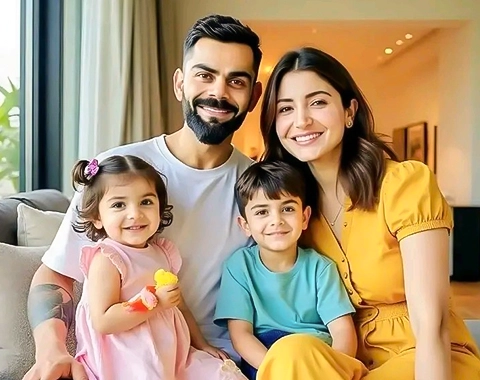
Life softened, eventually. The stability brought about by his marriage to Anushka Sharma in 2017 was certainly something that he had not experienced before in any of the previous stages in his life. Vamika was born in 2021 while Akaay came in 2024. Both of them have certainly made life warmer for him.
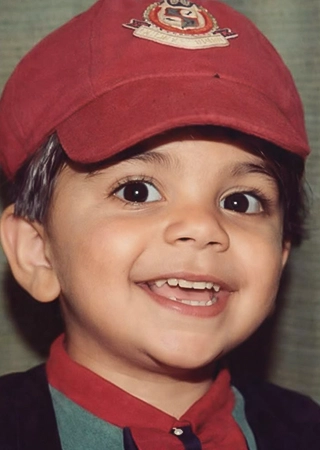
Rajkumar Sharma was in fact never just a coach. He was closer to an architect, the man who drew up the blueprint before anyone else knew there was one worth drawing. When a nine-year-old walked into the West Delhi Cricket Academy, Sharma noticed something most coaches would have missed — a kid genuinely willing to run the same drill over and over without complaint.
Other children chased the big shots. Kohli worked on footwork. Balance. The unglamorous mechanics that never make a highlights package. Sharma’s methods were old-school through and through, and Kohli soaked them up without pushing back. The off-side game that would later become his signature got built right there, in nets that were dusty and unremarkable and completely unaware of what they were producing.
Every time Kohli had a hard time, whether it was his lean streak on home soil or tough tour outside India, the first person he would ring was Sharma. Fame changed plenty about Kohli’s life. That bond wasn’t one of the things it changed. It continues to be a crucial aspect of the Biography of Virat Kohli because the coach and player relationship contributed to his technical base.
Domestic cricket in northern India isn’t kind to anyone. Tones become harsh, the ball remains low, and runs are scored only by those players who have the patience to fight for them again and again, without grumbling. This is where Kohli got the idea about respecting the time spent on the crease and learnt how to survive a session rather than dominate it.
His first-class debut in 2006 produced a steady fifty. Not a headline. More a signal — a quiet one — that he belonged. It’s at that point when the Virat Kohli biography, an account of cricket star truly picks up speed.
This tournament, held in Malaysia in 2008, was the point where everything after that took a different direction. Kohli took charge of the under-19 Indian team with a level of aggression that seemed to be developed. The team went on to win the tournament, and the selectors in India couldn’t overlook the success.
It wasn’t only a youth achievement, either. Looking back, it reads like a preview of the captaincy style he’d later bring to the senior side — vocal, combative, allergic to backing down.
His ODI debut in August 2008 wasn’t glamorous by any stretch. He looked jumpy at the crease, flashing at deliveries outside off stump the way most young batters do before international bowlers teach them not to. And international cricket punishes hesitation fast. Kohli learned that lesson early, and he learned it in public.
His Test debut arrived in 2011, but the real breakthrough came on the 2011–12 tour of Australia. A maiden hundred at Adelaide — gritty, stubborn, refusing to give anything away — proved he could survive, and then thrive, in conditions built to expose exactly the kind of flaws he still carried at that stage.
By the mid-2010s, Kohli had become the pulse of India’s limited-overs batting. Opposing captains knew a chase wasn’t safe, not really, until he was back in the pavilion. His Test game climbed in parallel, and it converted a good number of purists who’d still been holding out, quietly, for proof he wasn’t purely a white-ball talent.
This is the stretch that cemented his place among the legends of cricket in India, a group defined less by raw numbers and more by the influence and staying power that numbers alone can’t quite capture in Virat Kohli biography and records.
Early Years & Breakthrough (2008–2011): ODI debut, Under-19 World Cup triumph, Test cap, gradual rise.
Rise to Stardom & Captaincy (2012–2016): Adelaide hundred, ODI vice-captaincy, full leadership, 973-run IPL season.
Peak Dominance & Records (2017–2021): Consecutive ICC awards, overseas Test wins, unmatched consistency.
Milestone Chases & Global Triumphs (2022–Present): T20 World Cup win in 2024, Test retirement in 2025, continued ODI excellence.
The following is a brief timeline of the Virat Kohli career history from his first big achievement to the later part of his international career.
Statistic | Details |
Matches | 123 |
Runs | 9,230 |
Average | 46.85 |
Centuries | 30 |
Half-Centuries | 31 |
Highest Score | 254* (vs South Africa, 2019) |
Double Centuries | 7 |
Another dimension is added to the Virat Kohli biography when Test cricket comes into play. He wasn’t only a fluent stroke-maker. He was someone who, oddly enough, seemed to enjoy the ugly sessions — the ones where nothing came easy and survival was the whole job. A record of seven double centuries was made along with some outstanding international performances in countries like Australia and South Africa, where bounce and lateral movement were not just endured but coped with.
As captain of the team, he played in 68 Test matches, winning 40 of them which is more than any previous Indian captain. The way he reacted to the terrible series against England in 2014 revealed a lot about his character as well as all the runs that he scored.
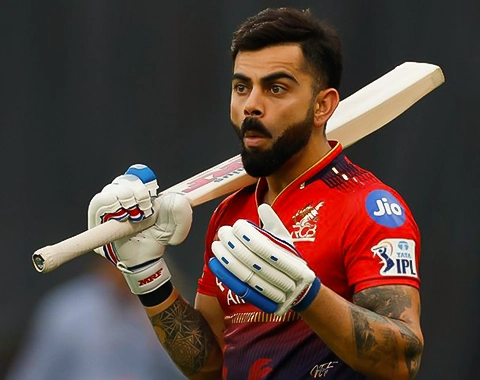
ODI cricket didn’t just suit Kohli. It mirrored something in his temperament. The format rewards rhythm, patience, clarity of thought under fatigue — and Kohli had all three in a way that felt almost unfair to opposing bowlers. He never treated the 50-over game as a stage for big shots. It was more an extended chat with the cricket ball, a chat he wasn’t prepared to lose too often.
The Virat Kohli biography has a very close relationship with this phase of his career, as he achieved many memorable innings in ODIs.
India had its moments when it went out to chase targets that looked uncomfortable on paper. But there would be something about how the atmosphere at the ground would change the moment Kohli came in to bat. And you could feel the mood in the stadium shift the second Kohli took guard. Not arrogance. Familiarity. Crowds had simply seen him do this too many times to doubt it again.
He didn’t rush the target. He didn’t panic when dot balls piled up. He chased moments instead of scoreboards — the quiet ones, where a single well-timed boundary could tilt an entire run chase back in India’s favour.
Statistic | Details |
Matches | 311 |
Runs | 14,797+ |
Average | 58.71 |
Centuries | 54 |
Half-Centuries | 75+ |
Highest Score | 183 (vs Pakistan, 2012) |
His highest score, 183 against Pakistan, wasn’t only a big number on a scorecard. It was a chase that felt like a pressure cooker until, somewhere in the middle overs, he simply took the lid off. Early caution. A mid-innings acceleration nobody saw building. Then a finishing burst that made a stiff target look almost generous by the end.
Shattering the record held by Sachin Tendulkar for scoring 49 centuries in ODIs, achieved at the 2023 World Cup, was also not an achievement that went unnoticed for any particular reason. This was one of those moments that seemed to symbolise the handing over of the torch from one generation to another. Not only did the crowd cheer, but it went wild. Kohli, on his part, did not even celebrate in a major way – just a bat raise and a nod.
His chase numbers still sit alone at the top. No contemporary has combined strike rotation, fitness and mental composure with quite that level of repetition. When the required rate climbed, he didn’t panic. He just changed gears, the way a driver downshifts without thinking about it.
The T20I format called for speed and accuracy, and these traits were already inherent to Kohli well before the format had been fully developed into an art form. Kohli made his debut in 2010, at a time when cricket in India was still figuring out how to play the format. He would go on to become the focal point of India’s batting in this format in the following years.
Runs: 4,188
Centuries: 1 (122 vs Afghanistan)*
The T20I stats that he has racked up were not about slogging at all, and they did not have to be. It was about angle reading, finding the gaps that others could not, and running like no one else. His undefeated 82 against Pakistan in the 2022 T20 World Cup is definitely one of the most thrilling innings ever played in the T20 World Cup. India were in deep trouble. The chase was out of reach several times. Yet, Kohli kept his cool and took the game back where it did not belong to go.
The Virat Kohli biography will certainly lack the T20I era since it proved the capability of Virat to adapt to the change while retaining all the skills that made him succeed.
Having won the 2024 World Cup, he quit the T20I format. It is better that he took the decision of retiring from the format himself when he wanted rather than waiting for selectors to take it on their own.
Some players collect Virat Kohli profile and records the way collectors collect stamps — passively, over time. Kohli built his. Not by chasing milestones for their own sake, but by simply showing up in the moments where matches tightened and someone needed to bring clarity to the chaos.
Record / Achievement | Details |
International Runs | 28,200+ across formats |
International Centuries | 85 |
ODI Centuries | 54 |
Test Centuries | 30 |
Major World Cup Record | Player of the Tournament, 2023 |
Major Chase Record | Highest ODI chase average |
Major ICC Achievement | ICC Cricketer of the Decade (2011–2020) |
He has managed to become one of the legendary cricketers in the sport of cricket whose defining characteristics are longevity, flexibility, and resilience to perform under pressure time after time. Few cricketers can match up to his consistency in all three forms of the game. Fewer still have held those standards of being counted among the legends of cricket for this long without an obvious decline setting in.
This is also where he stands shoulder-to-shoulder with the legends of cricket in India, a lineage of names who shaped entire eras and carried teams through the phases nobody else wanted to own.
The World Cup sections take up much of the Virat Kohli biography, especially due to the immense pressure which comes along with his performances.
Kohli was the youngest player on the Indian team at 22 years old. His task was not an impressive one but a reliable one; something that would make more sense in retrospect rather than in the actual game. Kohli’s composure in the final helped bring order to the game when some early wickets were lost. India won the game, and he finally tasted what it was like to win something big.
By 2015 Kohli was no longer the promising junior partner. He was central to the batting lineup, full stop. His tournament had flashes of real grit, particularly in the tighter chases, though India’s campaign ultimately stalled at the semi-final stage.
There was a lot more at the table for him, as now he was leading the team as a captain. India ruled the league stages, and the way Kohli played was consistent enough not to make headlines, but it ensured that the inning went on. His performance during the tournament, even though the semi-final against New Zealand ended in defeat, was noteworthy.
It was, by any objective standards, the work of a lifetime. He made 765 runs, the highest tally ever recorded by any batsman in one World Cup campaign. His fifty-first ODI century was struck in the semi-final, an occasion which was already looking historic before the ball crossed the boundary ropes. The viewers at Winstrike followed his performance statistics with almost religious zeal.
India failed to live up to the expectations in the final. Kohli, however, was able to win the Player of the Tournament title regardless. It was an indication of how superior he was compared to his peers in the tournament.
ICC career enhanced further by winning the Champions Trophy in 2013. His record in the game places him alongside the greats of cricket across formats, in particular, the knock-out matches where reputations are made or forgotten.
In a league built on trades and auctions, Kohli’s loyalty to Royal Challengers Bengaluru became one of the IPL’s more unusual stories, despite constant reshuffling. He didn’t merely play for RCB. He carried them, season after season, through years where the team soared and years where they collapsed in ways that would have tested anyone’s patience. Kohli stayed the constant through all of it — the face of the franchise, its emotional anchor, whether that was a compliment on a given night or a burden.
Fans often said RCB mirrored Kohli’s own personality: passionate, expressive, allergic to giving up even when the odds had clearly tilted against them. There’s real truth buried in that comparison. You could see it in how he celebrated a wicket that wasn’t even his, in the way he chirped at bowlers to lift, in the restless urgency he carried out to the middle even in matches that had already slipped away.
The 2016 IPL season wasn’t just a statistical high point. It was one of those rare stretches where everything aligned at once — form, fitness, clarity, intent, all pulling in the same direction. Kohli scored 973 runs that year, a number that still doesn’t quite feel real when you say it out loud. Four centuries. Chase after chase settled early. Innings built on timing rather than raw force.
Analysts on Winstrike still revisit that season regularly, and not purely for the numbers. It’s the rhythm people go back to. Kohli didn’t look like he was forcing a single thing that summer. He looked, more than anything, like he was simply in conversation with the game, and the game kept agreeing with him.
For years, RCB’s fans carried the particular weight of hope that keeps resetting itself. Every season felt like a fresh chance. Every elimination felt like an old, familiar heartbreak repeating on a loop, then came 2025.
RCB finally won their first-ever IPL title, and Kohli was not just there to witness it but was at the very heart of it. He held the team together during the most challenging times and played with an intensity that turned Virat Kohli complete profile from the earlier years.
In 2026 they successfully defended their title. The final against Gujarat wasn’t just another match. It played out like a statement, delivered late and calmly by a man who by then had nothing left to prove and still seemed to want to prove it anyway. Not flashy. Not reckless. Controlled, precise, and fully aware of exactly what the moment required.
The IPL chapters is very important in the book on Virat Kohli biography, especially considering that his association with RCB has survived through many generations of cricketers and many fluctuations in the fortunes of the franchise.
Leadership can be easily quantified in terms of victories, trophies, milestones, and statistics. However, Kohli’s leadership should be considered in the light of the profound transformation of culture that took place within the team.
When he took the lead of the Test team in 2015, the Indian team was unbeatable at home but noticeably reserved when playing away. This problem was solved by Kohli, who did not act carefully. For instance, he increased the physical fitness of his team, which used to be considered optional before him. He supported fast bowlers in the situation where Indian teams used spin because of a habit rather than the desire to win. He also encouraged his teammates to train more and fight like himself.
The win of the 2018-19 series against Australia should be considered the greatest accomplishment of India’s history. The Virat Kohli life history was significant not just in terms of the final score. This was the demonstration of the fact that India was capable of winning in conditions which had been strange for them for many years.
As much as his leadership was not perfect, Kohli made some tactical errors, was prone to emotional outbursts, and made some decisions that have been heavily criticised then and continue to be criticised to this day. But when it came to leadership, it was always about direction with Kohli. And he certainly gave India a direction that was about aggression and fitness.
Kohli’s batting gets described in technical terms most often — balance, footwork, timing. The real strength underneath all of that is simpler: clarity. He knows what he’s going to do before the bowler has finished his run-up, which sounds obvious until you watch how many batters clearly don’t.
His cover drive is the signature. Upright stance, full face of the bat and the ball threaded through gaps that barely look like they exist until the ball’s already through them. It is a delivery which succeeds in being both classically beautiful yet equally modern.
His skills at chasing are basically due to his ability to read the game much better than most others in his category. He changes strike when the bowling becomes tight, picks up speed when the fielders spread out, and runs between the wickets with great intensity.
Fitness sits underneath all of it. It’s what lets him bat deep into an innings, hold his concentration when lesser players fade, and stay sharp in exactly the moments that decide matches.
Awards alone cannot determine the character of an individual, but they can surely tell us how the rest of the world has perceived him throughout his life. Awards have been heaped upon Kohli, but what counts is being consistent. Consistency of performance across all formats, through all the years, through every stage of a career which just wouldn’t stop progressing.
The awards part of the Virat Kohli biography highlights the recognition of his performance regardless of his performance in the match.
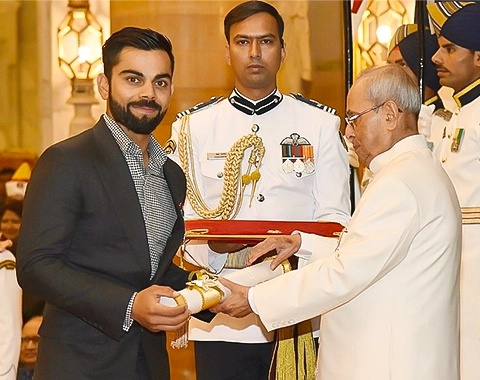
Award / Honor | Year | Significance |
Arjuna Award | 2013 | National recognition for sporting excellence |
Padma Shri | 2,017 | India’s fourth-highest civilian honor |
Rajiv Gandhi Khel Ratna | 2018 | India’s highest sporting honor |
ICC ODI Cricketer of the Year | 2012, 2017, 2018 | Best ODI performer globally |
Sir Garfield Sobers Trophy | 2017, 2018 | ICC Cricketer of the Year |
ICC Cricketer of the Decade | 2011–2020 | Recognition for decade-long dominance |
The T20I format called for speed and accuracy, and these traits were already inherent to Kohli well before the format had been fully developed into an art form. Kohli made his debut in 2010, at a time when cricket in India was still figuring out how to play the format. He would go on to become the focal point of India’s batting in this format in the following years.
Runs: 4,188
Centuries: 1 (122 vs Afghanistan)*
The T20I stats that he has racked up were not about slogging at all, and they did not have to be. It was about angle reading, finding the gaps that others could not, and running like no one else. His undefeated 82 against Pakistan in the 2022 T20 World Cup is definitely one of the most thrilling innings ever played in the T20 World Cup. India were in deep trouble. The chase was out of reach several times. Yet, Kohli kept his cool and took the game back where it did not belong to go.
The Virat Kohli biography will certainly lack the T20I era since it proved the capability of Virat to adapt to the change while retaining all the skills that made him succeed.
Having won the 2024 World Cup, he quit the T20I format. It is better that he took the decision of retiring from the format himself when he wanted rather than waiting for selectors to take it on their own.
His garage carries the luxury sports cars you’d expect from someone at his level of global stature. Unlike plenty of athletes, though, Kohli’s relationship with that lifestyle rarely reads as loud. It comes across as measured, almost deliberately understated.
A premium residence in Mumbai anchors his family life these days. It’s built around privacy and stability rather than spectacle, which tracks with how he’s talked about fatherhood changing his priorities.
His bats carry the MRF sticker, and his own brand, One8, covers fitness gear and apparel.
His net worth is reportedly estimated to be in the range of $125 million and $130 million as a result of endorsements, IPL deals, and investments he has made. This net worth is only an estimate, not a verified one, and should be treated as such.
For those considering the Virat Kohli biography apart from his statistics in the game of cricket, his lifestyle provides yet another dimension to how he has translated into commercial success.
Several biographies have tried to map his journey from Delhi’s domestic circuit to global cricket, with varying degrees of access and insight. Together, these add more context to the Virat Kohli biography than just scores and reports of matches.
Streaming sites have also created some documentary films about his workouts, his level of discipline, and some of his private life outside the world of cricket.
The reason he gets this name lies in his consistency and level of fitness, which is setting a benchmark for a whole generation. His capability of performing well under pressure time and again, throughout a period of over a decade, puts him into the legends of cricket in India.
His global fan following and a decade-plus of sustained dominance did the rest. The title of legends of cricket wasn’t handed to him. It got earned, argument by argument, innings by innings, until there wasn’t much of an argument left to have.
For those looking for the King Kohli biography, one would understand that his moniker has come from years of hard work and not an overnight creation.
The legacy of Kohli extends far beyond his statistics. He revolutionised the Indian cricketers’ approach towards training and fitness and the manner in which they played abroad, rather than just surviving abroad. The younger crop of cricketers who emerge from the ranks is inspired by him and emulates his work ethics.
His impact places him among the sport’s enduring legends of cricket, and analysts on Winstrike have repeatedly pointed out how his preparation methods reshaped what modern batting is even supposed to look like — less about talent alone, more about the relentless work sitting underneath it.
The impact forms one of the reasons why the Virat Kohli biography remains fascinating despite the fact that his career in the international arena has entered another stage.
The Virat Kohli biography in a single line would be that of devotion, hard work, and an unstoppable fire that simply will not die regardless of how many times it needs to be extinguished. Starting from the streets of Delhi to packed stadiums with millions of fans, Virat Kohli created a reputation. All of his accomplishments, all of his World Cups, his IPL, his captaincy and his overall influence in cricket make Virat Kohli one of the best players this game has seen.
His achievements have had a great impact on the playing style of modern-day cricket. And the name of Virat Kohli life biography for as long as people take interest in this sport will remain an essential part of any discussions related to Virat Kohli cricket biography. For those who wish to read Virat Kohli biography in English, Virat Kohli’s story ends up being about much more than statistics. It is a tale of ambitions, dedication, failures, reinventions, and unwillingness to settle for average standards.
The Virat Kohli biography also helps explain the reason behind the fact that Virat Kohli career and achievements cannot be described solely in terms of centuries. The Virat Kohli career and accomplishments, his leadership qualities, fitness levels, and high performance under pressure are all part of the big picture.