
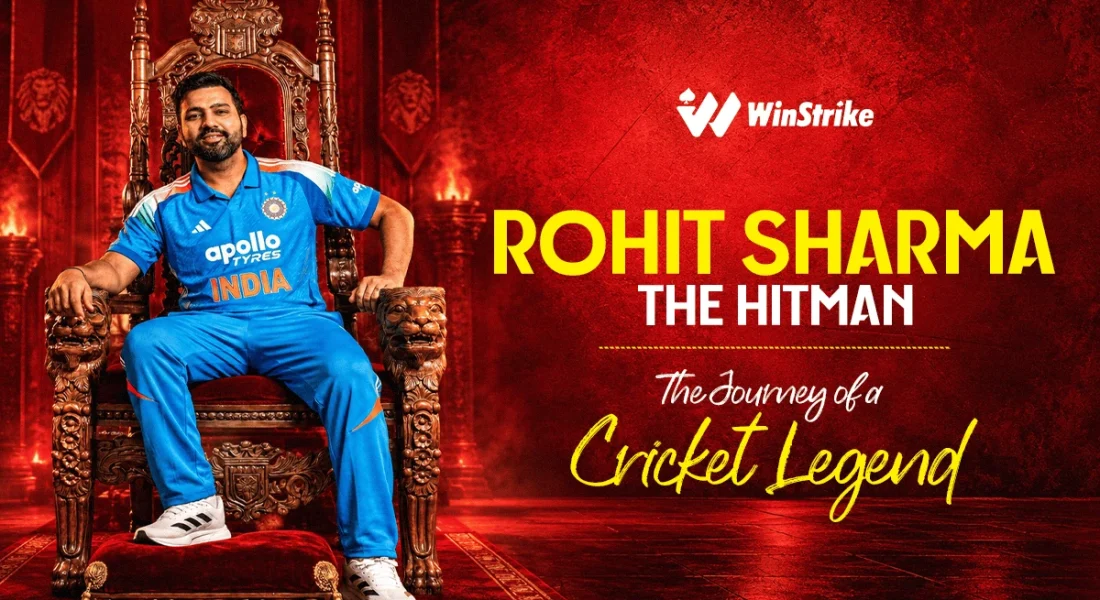
There is an unseen picture about Rohit Sharma biography. That of a father sitting in one room in Dombivali, calculating coins to find whether he could possibly afford to send his child to a cricket camp in another part of town. Nothing certain there but a parent who is putting faith in his son’s ability to succeed. And that too with whatever little that he had in hand.
This is how the Rohit Sharma biography begins. Not from Barbados lifting the World Cup. Not from Eden Gardens hitting a hundred on debut. But from the single-room house of his parents where the mathematics was being done based on a caretaker’s salary.
What happened between that room and the record books is one of the most interesting stories in modern cricket. The kid got dropped more times than he can probably count. He missed a World Cup he arguably should have played in. For years, people who watched him bat said he had the most natural talent in Indian cricket, then changed the channel. It took one call from MS Dhoni in 2013 to finally put him in the right place, and from there he didn’t stop. Three ODI double centuries. Five IPL titles. A T20 World Cup. A Champions Trophy. An individual high score record in the history of one day international (ODI) cricket.
This Rohit Sharma biography covers all of it. His family, his education, how he survived those early years, how Dinesh Lad and then MS Dhoni changed his trajectory, what makes his batting tick, the records, the captaincy, and where the story stands today. Not the curated version. The actual one.
Before diving in, here’s a Rohit Sharma biodata table for anyone who wants the quick version of this Rohit Sharma biography first.
Detail | Information |
Rohit Sharma full name | Rohit Gurunath Sharma |
Nickname | Hitman |
Date of birth | 30 April 1987 |
Rohit Sharma birth place | Bansod, Nagpur, Maharashtra |
Rohit Sharma height | Around 5 ft 8 in |
Batting style | Right-hand bat |
Playing role | Opening batsman |
International debut | ODI debut, 23 June 2007, against Ireland |
IPL career | Deccan Chargers, then Mumbai Indians |
Captaincy | India, all formats, from 2022; Mumbai Indians, 2013 to 2023 |
Major achievements | 3 double centuries in ODIs, 5 IPL wins, 2024 T20 World Cup, 2025 Champions Trophy |
Everything on that table has a proper story behind it. Here it comes.
Rohit Gurunath Sharma was born on 30th April 1987 in Nagpur. His father Gurunath was a caretaker at the storehouse of a transport company. The whole family consisting of his mother Purnima and his younger brother Vishal used to live in one room in Dombivali.
Now here’s the part that matters. Because the family couldn’t make the money stretch, Rohit Sharma childhood was split between two places. He lived mostly with his grandparents and an uncle in Borivali, seeing his parents mostly on weekends. That’s a strange, slightly lonely way to grow up. Two addresses, two kitchens, never quite fully unpacked anywhere. But Borivali, as it turned out, was exactly where he needed to be.
Mumbai’s cricket culture runs through the city’s bones, and Borivali sits right inside it. Street cricket, maidan cricket, arguments about technique, kids dragging each other to local coaching sessions. Rohit was absorbing all of that during the exact years when a cricketer’s eye and temperament get formed.
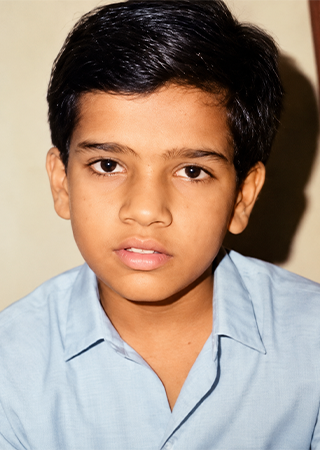
He ended up at Swami Vivekanand International School in Mumbai. The school gave him a sports scholarship, which tells you everything you need to know about Rohit Sharma education and how early the talent was obvious to anyone paying attention. He didn’t get in on grades alone. Cricket got him through the door, and cricket kept him focused once he was inside.
Classroom work slipped as the cricket demands grew. That’s not a criticism. It’s just what happens when a teenager with serious talent starts training with serious coaches. His Rohit Sharma education continued, but cricket had already become the actual curriculum.
The person who had moulded Rohit into a batsman during his formative years of cricket is none other than Dinesh Lad, a former Western Railway player who was coaching at Borivali. Notice how the coaching tree goes back. Lad had learned under Ramakant Achrekar who had honed Sachin Tendulkar into Sachin Tendulkar. It is no accident that lad knew what batting talent looked like and identified it in Rohit right from the get go – the balance at the crease, the timing, and the sound that the ball made coming off his bat compared to others his age.
Also something that Lad knew is the fact that talent without hard work is nothing more than potential and potential does not score runs. He was with Rohit throughout the less glamorous days of domestic cricket. During 2005, Rohit scored 142 playing for West Zone in a List A game. Rohit debuted for MI in first-class cricket in 2006. By December 2009, not yet a permanent fixture in the Indian team, he scored 309 not out against Gujarat in Ranji Trophy.
The talent was never the question. Consistency was the question. And that took longer to answer.
His Rohit Sharma family kept the faith through years when keeping faith wasn’t easy. His father Gurunath, his mother Purnima, his brother Vishal. None of them had a cricket background in the formal sense. They had something else: a quiet, steady belief that the boy had something. Growing up between two households could have fractured that support. It didn’t.
In 2008, Rohit met Ritika Sajdeh. Yuvraj Singh made the introduction, since Ritika happened to be his rakhi sister. Before things turned serious, Ritika had actually managed Virat Kohli’s career for a spell in sports management. The timing is worth noting. She knew exactly what life inside Indian cricket looked like, what the travel schedule does to a relationship, what the scrutiny feels like, what being a public figure’s partner costs. She chose it anyway.
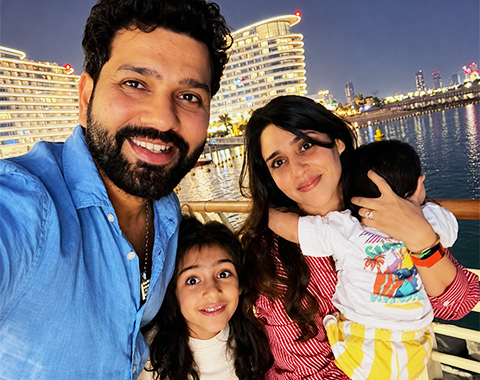
Six years of friendship and dating followed. They got engaged in June 2015. The wedding came in December that same year, in Mumbai. His Rohit Sharma wife has stayed closely involved in his professional life ever since, handling large portions of his management from behind the scenes rather than in front of cameras.
They have two children: Samaira, born in December 2018, and Ahaan, who arrived in November 2024. By most accounts, the home is deliberately separate from the public version of Rohit Sharma. He talks about his family in interviews, but carefully. That boundary seems important to him.
Domestic cricket built everything. People who only know Rohit from international highlights sometimes miss how much of his game was constructed, painfully, across seasons of Ranji Trophy and List A cricket. The West Zone outing in 2005, the Mumbai debut in 2006, the Ranji Trophy 309 in 2009. These weren’t stepping stones he skipped over. He needed every one of them. Any Rohit Sharma biography that skips this section misses where the technique actually came from.
His Rohit Sharma cricket debut on the international stage came on 23 June 2007, an ODI against Ireland. Later that year, he was in the squad that won the very first T20 World Cup in South Africa, under MS Dhoni. That same tournament was a young Virat Kohli’s introduction to the world too. The 2007 T20 World Cup was, in hindsight, the launch pad for an entire era of Indian cricket. Rohit didn’t carry that specific tournament, but he was part of the team that lifted the trophy at twenty years old. Not many people get to say that.
What came after was harder, and no Rohit Sharma biography gloss over it honestly. He scored two ODI centuries in 2010, which should have been the start of something. Instead, two rough years of soft dismissals, fitness doubts, and selection inconsistency followed. He missed the 2011 World Cup entirely, a tournament India went on to win at Wankhede Stadium in front of the country’s most famous cricketer. Rohit watched that from the outside.
He’s spoken about that period honestly in interviews. It stung. By his own admission, it pushed him. For a couple more years he remained on the fringes, getting chances, wasting a few, taking a few, never quite nailing down a permanent home in the lineup. The Rohit Sharma biography that most people know had not started yet. That was coming.
Those years between 2007 and 2012 are the ones that get glossed over in most profiles, and they shouldn’t. He was batting in the middle order mostly, coming in at five or six, trying to bat with freedom in fourteen-over bursts. It never really suited him. He needs time to build. He needs a platform. Dropping him into a match half-consumed and asking him to swing from ball one is like giving someone a paintbrush and asking them to sprint with it.
The talent kept showing. The consistency didn’t follow. Selection panels are not patient audiences. It’s the part of a Rohit Sharma biography that most fans find hardest to revisit.
In 2013, MS Dhoni made a call. Rohit Sharma would open the batting in ODIs.
Simple as that. One conversation, one change, and the entire shape of his career shifted. It’s the single call most Rohit Sharma biography accounts treat as the true turning point. Opening meant he was there from ball one. Powerplay fielding restrictions in the first ten overs, the field spread out, room to start moving his feet and finding rhythm. The pull shot, which is one of the most savage strokes in white-ball cricket when he plays it, became a first-over weapon rather than a middle-innings luxury. Paired with Shikhar Dhawan at the top, he gave India an opening partnership that other teams genuinely feared for years.
His Rohit Sharma international career, the version people actually remember, started in those twelve months.
Test cricket was more intricate. It is important to note that he made his Test debut in November 2013 against the West Indies in the Eden Gardens, which was also Sachin Tendulkar’s farewell match series, an essential piece of information for any Rohit Sharma biography. He scored 177 runs in his opening innings. This was followed by an unbeaten 111 in the next match in the Wankhede stadium. Stunning debuts indeed.
It never did. He was up and down with the side for the next several years, playing well at some times, not so well at others. The 212 against South Africa in 2019 in Ranchi illustrated what could have been achieved when he was steady. However, such an assurance of performance arrived late and his Test career, as shown by the Rohit Sharma biography, will forever bear that “what if he started opening in Tests earlier?” mark.
By his retirement in May 2025, he had played 67 Tests in total and scored 4,301 runs, made 12 hundreds and 18 fifties. It is a decent career, but certainly not one that he had indicated on his debut. The greats of the game are seldom defined by their Test performances anyway.
Here is where the conversation ends. As an ODI opener from 2013 onward, he built one of the most remarkable batting records the format has produced, and Rohit Sharma cricket career followers know every chapter.
Well past 11,000 runs by the time this Rohit Sharma biography was current. His double centuries sit in a category of their own. His World Cup performances keep getting cited. And at Lord’s in 2026, still going, still making 138 when everyone was writing the obituaries.
In T20Is, he became the all-time leading run-scorer before stepping away from the format in June 2024 with no unfinished business left.
Watch Rohit bat in the first over of an ODI innings and then watch almost anyone else do the same. Most openers in world cricket, even great ones, carry a visible tension in those first few balls. Getting through them, surviving, establishing. Rohit does something different. He settles in as though the innings is already his. Compact stance. Still head. He waits for the ball longer than the bowler expects, and then he times it somewhere the field isn’t.
The pull shot deserves its own paragraph. When the short ball arrives, something shifts in his body language. He’s been waiting for it. The bat comes through with this heavy, almost relaxed swing, and the ball goes into the stands before the fielder has even moved. It’s the kind of stroke that makes a bowling coach sit down heavily in his chair.
And then there’s the six-hitting, which is where his Rohit Sharma batting style becomes genuinely jaw-dropping. He hits sixes that travel further than they have any right to, because he doesn’t hit them hard so much as hit them sweet. Perfect timing, off the middle of the bat, late enough in the swing that all the weight goes through. He’s been among the leading six-hitters in world cricket across formats for over a decade.
In powerplay overs, he doesn’t rush. He works gaps, takes the easy singles, picks off the loose deliveries for four. Then the field spreads, and something changes. The Rohit who was being patient twenty overs ago doesn’t exist anymore. The middle overs belong to him completely.
Test cricket demanded the same patience but over a longer canvas. He could bat all day when the conditions were right. The problem was doing it consistently across home, away, early in his career, against different attacks. He solved more of those variables than he didn’t, which is how you end up with 12 Test hundreds and a respectable average. Just not the Test career that 177 in his first innings seemed to be pointing toward.
Once the opening slot was his in 2013, the Rohit Sharma ODI centuries came in a rush that felt, at times, almost routine. He now holds one of the largest century tallies in ODI history. Big hundreds, lots of them, against good attacks on varied pitches. India’s white-ball batting over the last decade has had many contributors. He was the one at the top of the order making it possible for everyone else below.
Three. He has three ODI double centuries. No other batsman can make that claim.
The first one was made in November 2013 against Australia in Bengaluru. 209 in 158 deliveries. That innings also holds the record for the most sixes hit by a batsman in a single ODI innings until now. A year later, in November 2014 at Eden Gardens against Sri Lanka, he made 264 runs. In 173 deliveries. Making 33 fours. This is the figure which the Rohit Sharma biography refers to the most times because till date, nine years down the line, it stands as the highest individual score in the history of ODI cricket. One innings. Just one afternoon. No other batsman has been able to cross the 260 run mark in the format since then. And the third one was scored in December 2017 against Sri Lanka in Mohali. An unbeaten 208, scoring from 100 to 200 runs in 36 balls only.
Three double centuries by Rohit Sharma in ODI cricket history. Only one person.
In each one of these three innings, there is nothing that characterises them other than being ruthless. Most of the cricket players, who get 150 runs in one inning in an ODI match, begin thinking of what would be the target set for his team. Rohit Sharma, when scoring 150 runs, thinks about how long he can play. He continues to accelerate in the second hundred and not decelerate, and this skill is quite unique to him.
His 264 against Sri Lanka in 2014 is the highest individual score in ODI history. Full stop. That number alone would make this Rohit Sharma biography worth reading. Add the three double centuries, the most any male batsman has scored in the format, and you have a body of Rohit Sharma records that nothing from anyone else currently competes with. Fans who want the live career total can check a cricket stats tracker like Winstrike for the most current numbers.
Five centuries in a single World Cup. That happened in 2019 in England, across nine matches, 648 runs in the tournament. It ties the record for most centuries in a single edition of the World Cup. Six World Cup hundreds in total, a number he shares with Sachin Tendulkar. He also played in every T20 World Cup from 2007 through 2022, the full run from the format’s first edition to its sixth.
The personal records matter, but they only tell part of it. His Rohit Sharma achievements include delivering those records in knockout matches and finals, not just comfortable bilateral series against weaker opposition. That distinction is important. Runs in big games are worth more than the same runs in November qualifiers, and his weight of them in important cricket is real.
Leadership didn’t start in a national jersey. It started the same way his batting did: quietly, in domestic cricket, with Mumbai. No fanfare, just a job to do. The IPL followed, and it was there that Rohit Sharma captaincy actually took shape, away from the weight of national expectation. A starting point this Rohit Sharma biography needs to mark clearly before jumping to the bigger story.
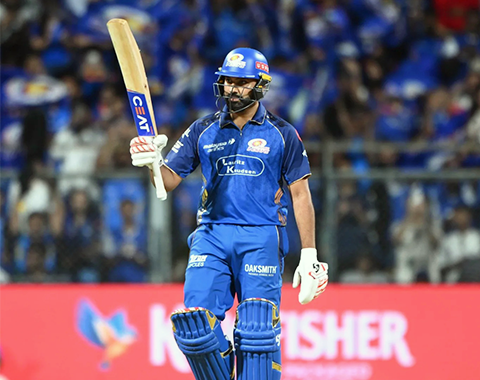
He took the Mumbai Indians captaincy in 2013 and kept it for ten years. Ten years in a franchise league famous for constant change is almost impossible to explain. Most IPL captaincies last two, maybe three seasons before something breaks. His didn’t. Five titles across that decade: 2013, 2015, 2017, 2019, and 2020. For a good stretch in the mid-2010s, they were the default answer to “Who’s the best IPL team?”, and a large part of that was the captain setting a culture of ruthless, calm professionalism rather than reactive panic.
The run ended in December 2023 when the franchise handed the captaincy to Hardik Pandya ahead of 2024. That decision, to put it diplomatically, drew commentary. Sunil Gavaskar was among the former players who pointed out the obvious contradiction in what the franchise asked Rohit to absorb, leading both club and country simultaneously for years, and then taking the club away. The fans made their feelings known too.
Full international captaincy, across all three formats, came in 2022. Rohit Sharma captaincy at the India level began properly after Virat Kohli’s tenure ended. What followed was better than most people expected. India lifted the 2024 T20 World Cup in Barbados, finishing the tournament without a single loss. The 2025 Champions Trophy title in Dubai came next, a second global trophy in two years. A second global trophy that most Rohit Sharma biography summaries now list alongside the 2024 win without needing to explain the significance.
Two major trophies in two years as full-time India captain. That’s a rare kind of achievement for any Indian captain, and it answered a question that had hung around Indian cricket for a long time.
Players who have been in his changing room know he is a leader who does not act as a captain. He is not making fire and brimstone speeches at the team meeting. He contemplates, he communicates, he listens, and when there is a series of bad scores by one of the players, he stands by the player no matter what. This kind of leadership creates loyalty and distinguishes good leadership from that of a legend of the game.
He entered the IPL in 2008 with Deccan Chargers, a franchise that no longer exists in the league today, a footnote most Rohit Sharma biography pieces skip past entirely, though it matters. Those seasons were mostly unremarkable. He was young, batting in the middle order, learning T20 cricket the way you do when you’re twenty-one and everything is still new.
He was signed up by Mumbai Indians in 2011. Two years later, they made him their captain. From here onwards, any Rohit Sharma biography and Mumbai Indians make one sentence each. All changes happened thereafter. Plus, Rohit Sharma IPL career and Mumbai Indians became one sentence from 2013 onwards. The connection between his identity and that of the team is such that not many players have such a connection with a team.
Five titles in 2013, 2015, 2017, 2019 and 2020, the record of trophies that people look out for when they are going through a Rohit Sharma biography in search of figures. The individual achievements throughout those seasons, especially in knockouts, where the tournament mattered the most, helped him build his status as a big match player in the format. This is not an innate quality. This is a decade’s worth of learning the art of batting in big matches.
Even after Hardik Pandya took the armband, what Rohit built at Mumbai Indians didn’t disappear. The culture stayed. The approach to selection, to managing pressure games, to protecting young players, to playing fearless cricket in finals: all of that was authored largely by him. Fans still think of Mumbai Indians in his terms, and they probably will for years. For followers tracking his IPL career, platforms such as Winstrike have become part of the wider cricket-viewing experience.
Three ODI double centuries. The ODI world record score. Five hundreds in a single World Cup. Six World Cup hundreds across his career. Five IPL titles as captain. T20 World Cup winner. Champions Trophy winner. All while leading the national side. Few careers in modern cricket cover that much ground, and fewer still reach it while already being talked about among the legends of cricket in India.
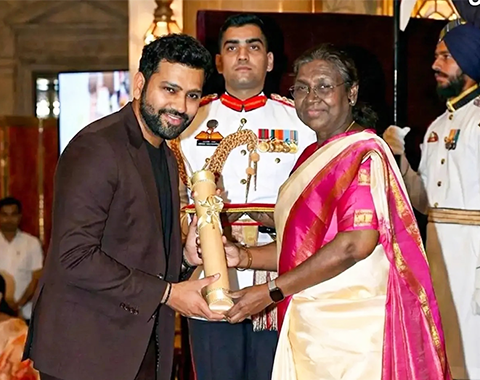
List of Rohit Sharma’s awards covers a period of well over a decade of his achievements, and the chronology of these awards is certainly something that needs careful consideration when discussing the Rohit Sharma biography. The first award on his list is the Arjuna Award, which he got in 2015. The Men’s ODI Cricketer of the year, awarded by the International Cricket Council, followed in 2019. The highest award given in India for sports achievement, the Major Dhyan Chand Khel Ratna Award, followed in 2020. The Padma Shri was conferred on him in 2026 for his contribution to Indian cricket.
T20 World Cups of 2007 and 2024. Champions Trophies of 2013 and 2025. Five Indian Premier League victories. It is rare to find a player in the sport who has achieved so much as to keep his name on the list of the greatest players in cricket statistics pages like Winstrike.
The Rohit Sharma retirement came in several stages rather than being sudden; for this reason, precise dates should be used in this part of the biography of Rohit Sharma. On June 2024, the night following India winning the T20 World Cup in Barbados, both Rohit Sharma and Virat Kohli retired from playing T20Is. Two generations of players retiring on the same day from the same format of the game. After that, in May 2025, the Rohit Sharma retirement from Tests was completed. This came right after winning the Champions Trophy and six weeks before the new World Test Championship cycle started.
ODIs are a different story. He remains active in ODI cricket as of late 2026, a current-status point every honest Rohit Sharma biography needs to state plainly rather than gloss. He’s still opening. He’s still captain. 2026 brought him a rough tour of England, low scores, the kind of form dip that gets turned into retirement narratives by people who should know better. Then he made 138 at Lord’s, and the conversation changed again. He’s spoken openly about the 2027 ODI World Cup as a target. No further retirement plans have been announced.
In the formats he’s already left, the influence remains. Batsmen who came through the Test and T20I setups under him often bring up his name when they talk about how they approach big games. A legacy point most casual Rohit Sharma biography reads gloss over entirely. He’s still playing, still leading, but even in the spaces he’s vacated, his shape is visible.
Step back from the individual records, and what this Rohit Sharma biography is really trying to show is range. Not many batsmen in the sport’s history have combined a Test double-century-class temperament with the world record for the single biggest ODI innings ever played. Even fewer have then gone on to captain their country to multiple global titles after already building a legendary IPL story.
Over 11,000 ODI runs and counting in this Rohit Sharma biography. Twelve Test centuries against quality attacks under different conditions. The greatest run-scorer in the history of T20I cricket at the time he retired from playing in the format. Five IPL championships in just ten years as a captain. Collectively, this constitutes an achievement Indian cricket had been searching for a long time ago – an opening batsman who can destroy any bowling attack right from the start of the game and a captain who can do that while winning the most important tournaments.
This combination is unique, really unique, even when compared to some legends of cricket in India whose records make it into the history books. In the company of contemporaries such as Virat Kohli, and legends such as Sachin Tendulkar, MS Dhoni, and Sunil Gavaskar, he belongs on equal terms in any discussion of legends of cricket in India.
Rohit Gurunath Sharma.
Bansod, Nagpur, Maharashtra, India on 30th April 1987.
Rohit Sharma is officially listed between 5 feet 8 inches (173 cm) and 5 feet 9 inches (175 cm) tall.
His ODI debut happened on 23rd June 2007 against Ireland. His T20I debut took place later that year against England.
Three times. 209 against Australia in 2013, 264 against Sri Lanka in 2014, and 208* against Sri Lanka in 2017. He is the only male player in the world to have scored three.
Runs in ODI cricket, highest individual score, 264 runs. Five centuries in a single world cup tournament. Holds the record for most centuries in a single World Cup tournament in history.
Right-hand batsman who plays at the opening position. Pull shot of Rohit is among the most dangerous shots in white-ball cricket. He starts accelerating after a long innings.
As captain of Mumbai Indians he won five IPL titles in the period from 2013 to 2020, making his way into record books of most successful captains of the league.
Ritika Sajdeh. Married in December 2015. Two children, daughter, Samaira and son, Ahaan.
Retired from T20Is in June 2024 and from Tests in May 2025. Still plays and captains India in ODI tournaments.
The story that this Rohit Sharma biography has tried to tell is not really about records. The 264, the five IPL titles, the World Cup, the Champions Trophy: those are the proof. The story is about what it took to get there.
A father in a single room in Dombivali, doing the maths. A kid who grew up between two households and learned to be self-sufficient earlier than most. A batsman who spent years being told he was talented and not selected, talented and inconsistent, talented and not quite trusted. And then one day in 2013, in the right batting position at last, the talent finally had somewhere to go.