The History Of Indian Cricket: A Journey Through The Years
Introduction
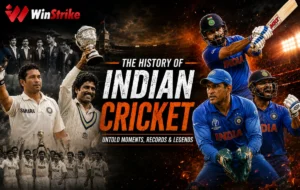
Anybody who has experienced the boredom of a hot summer afternoon with a blaring radio in the background knows what cricket is like here. It is not simply something you do, but rather something more than that since it creeps into your childhood memories. And even in everyday conversations and how families get together. The history of Indian cricket is not a clean and precise narrative but is messy, emotional, and full of lasting moments.
Some fans in fact watch with their hearts first, reacting before they even think. Others sit quietly, noticing small tactical choices that led to the evolution of Indian cricket. India’s cricket story sits right between those two instincts, and fans often say the same because this mix explains how India grew from scattered matches into a cricket powerhouse.
Early Foundations In The History Of Indian Cricket
Cricket arrived with British sailors, and it settled quickly because port cities already had busy social circles. It was Bombay and Calcutta that adopted the classic format first. One could thus picture those early matches played in the dirt with an interested crowd watching on the sidelines. The Calcutta Cricket Club, established in 1792, provided a firm foundation for the sport.
Community Influence On The Indian Cricket
Parsi teams in Bombay shaped early cricket because they trained seriously and travelled for matches. They toured England in the late 1800s, and even though results weren’t great, those trips mattered. They proved Indian cricket team could organise themselves, and they showed ambition at a time when most people didn’t even know what a proper cricket tour looked like.
First National Steps
India’s first international tour in 1911 brought Indian cricket legends from different regions together, and that alone felt like a step forward. The team lacked experience, although the tour planted the idea that India could represent itself as one unit. That concept developed gradually and finally resulted in India’s first ever Test fixture in 1932 at Lord’s. Consider the nervousness, the pride, the feeling of entering into the bigger picture.
How The History Of Cricket Grew After Independence
After independence, India had pride but not yet a strong cricket system. Early Test years were rough because the Indian cricket team often leaned on individual brilliance instead of a solid structure. Victories came slowly, and fans learned patience the hard way. Domestic cricket started to change that picture because it created regular competition and clearer pathways.
The 1950s To 1970s
Many viewed the Ranji Trophy to be a conditioning process for them because this tournament shaped their careers through their hard work on the cricket field. Spin was India’s innate quality since the combination of Bedi, Prasanna, Chandrasekhar, and Venkataraghavan managed the competition masterfully through variation and skill. Their success on foreign soil made India believe that victory was possible abroad too.
Breakthrough Tours
Ask any older fan about 1971, and you’ll see their face change. Those tours of the West Indies and England meant more than just series success. India batted with patience, bowled with craft, and suddenly beating big teams away from home didn’t feel impossible. The history of Indian cricket took a quiet but firm step forward there.
The 1983 Turning Point
If there’s one year that still feels like a story parents pass down, it’s 1983. India arrived at the World Cup without much expectation. People hoped, but they didn’t really believe. Then the victories started coming, and the mood shifted.
Leadership And Belief
Kapil Dev didn’t just lead; he made people feel braver. His 175* against Zimbabwe is the kind of innings you talk about even if you’ve never seen the full footage. India were in trouble, and he refused to accept the script. Moments like that change how a team sees itself. They also change how a country sees the team.
Long‑Term Impact
After 1983, cricket was no longer just a pastime on television but a dream come true for those who had never held an actual bat before. Money came pouring in, more coverage became available, and suddenly playing for India seemed like an achievable goal. Fans often calls 1983 the point where India stopped thinking of itself as a “plucky outsider” and started acting like it belonged on the big stage.
Legends Who Ruled Out The History Of Indian Cricket
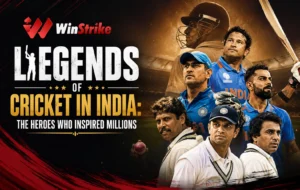
No one would be able to mention the history of Indian cricket without discussing the players who carried the torch for it.
Sunil Gavaskar
Gavaskar walked out to face fast bowling with a calm that still feels unreal. He didn’t shout, he didn’t show off; he just stayed. For many fans, he was the first proof that an Indian batter could stand up to the quickest bowlers in the world and not flinch.
Kapil Dev
Kapil felt like the friend who could do everything—bat, bowl, field, lift spirits. His presence gave India balance. Captains could change plans mid‑match because they knew he could plug gaps.
Sachin Tendulkar
If you were born in the nineties, you know that Sachin was very much like a part of the daily routine. Your schedule revolved around his batting performance. He carried the duty of the aspirations of a whole nation on his shoulders for over two decades. He then adapted himself to the changes in the match!
Rahul Dravid
Dravid felt like the quiet pillar in the middle order. When things looked shaky, you wanted him at the crease. He didn’t chase drama; he chased stability. That kind of presence lets others play their natural way.
MS Dhoni
Dhoni changed how India finished matches because he stayed composed in tight moments. His tactical calls often came late, but they came with clarity. Fans learnt to trust that if he were still there, the matchup wasn’t over.
Virat Kohli
Kohli brought a different kind of energy. He pushed fitness, intensity, and standards. Younger players followed because they could see the results. The modern Indian cricket team looks sharper partly because he refused to accept anything less.
Winstrike regularly features deep dives on these Indian cricket legends since their impact still echoes in the current squad.
Modern Growth And Tactical Change In The History Of Indian Cricket
From the year 2000 onwards, the sport started developing a faster tempo. Various new formats started developing, and the Indian cricket team had to think about their strike rate, workload, and tour together.
National Key Records
- Won the 2007 T20 World Cup, and T20 cricket exploded.
- Reached No.1 in Test rankings in 2009, which felt like a quiet but proud achievement.
- Achieved the 2011 ODI World Cup at home, and that night still lives in people’s voices.
- Made it to several ICC finals between 2014 and 2023, even if some ended in frustration.
- Built a strong fast‑bowling group, which would have sounded strange decades earlier.
Influence Of The IPL
The IPL changed everything. Young players suddenly shared dressing rooms with global stars, and they learned quickly. They saw new tactics, new training methods, and new ways to handle pressure. Winstrike often points out how the IPL helped India find fearless batters and multi‑skill players who now support the national side.
The Indian Cricket Team Today
Right now, cricket moves at a pace that would confuse even earlier eras. Teams need clear plans, but they also need talents who can improvise as well.
Fitness And Data
Training isn’t just about nets anymore. Players track workloads, watch video clips, and study tiny details like release points and field angles. Bowlers manage their bodies more carefully, and batters prepare for specific match‑ups. It sounds clinical at first, but it’s all aimed at giving them a bit more control when the competition level rises.
Leadership Approaches
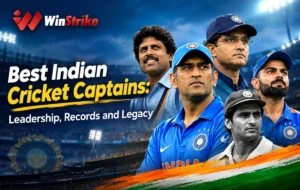
Think about the captains India has had. Ganguly brought pride and a bit of fire, and suddenly India stopped backing down abroad. Dhoni brought calm and sharp thinking, especially in chases. Kohli pushed intensity and fitness, while Rohit Sharma leans into stability and shared decision‑making. Each style left a mark on the history of Indian cricket, and together they built a layered identity.
Cultural Influence
Cricket in India doesn’t stay inside stadiums. It spills into streets, homes, and WhatsApp groups.
Shared Experience
Big matches feel like festivals. Families plan meals around them. Friends argue over selections. Someone always claims they “knew” that wicket was coming. Even people who don’t follow every series still know the big days. Today, mobile streaming delivers ball tracking and instant highlights directly to fans anywhere. Winstrike’s coverage often explores how this deep digital engagement reshapes how supporters understand match strategy.
Media And Reach
TV got things rolling in the 90s, while digital media platforms pushed the envelope even further. Fans today watch highlights, engage in analysis and share videos within minutes. Winstrike keeps fans updated on any new developments for fans following players and teams.
A Story Still Moving
The history of Indian cricket isn’t a finished book sitting on a shelf. It’s more like a diary that keeps getting new pages. New players join, new formats emerge, and new tactics develop. Every season is great for some and hard for others, but the narrative continues.
The history of India proves that what you require is not one big thing but little things done over many years by many people. That’s what makes this history feel human. It’s built by hands, hearts, and choices, not just numbers on a scoreboard. As new formats emerge, Winstrike stays committed to documenting every record, tactical shift, and historic victory.