
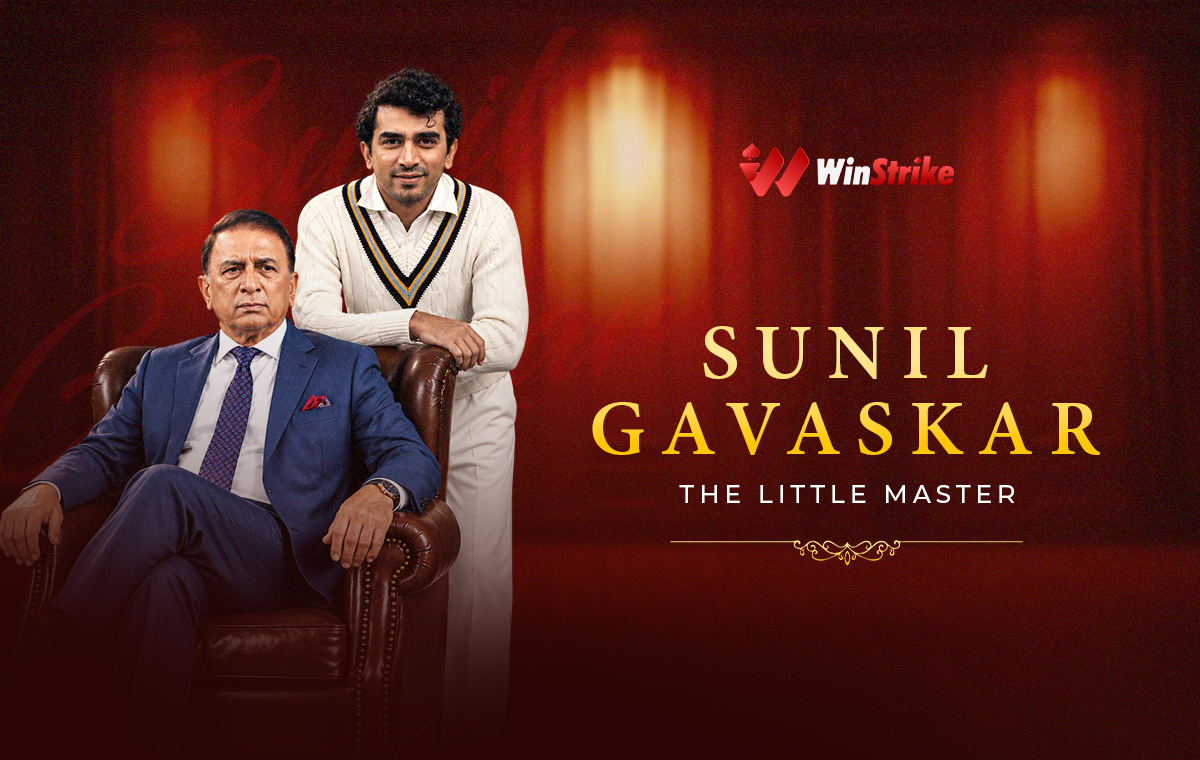
No helmet. No arm guard. In this Sunil Gavaskar biography, No chest pad. Just a small man in a white shirt, standing still while four West Indian fast bowlers took turns trying to hurt him.
That’s the image worth holding onto as you read this Sunil Gavaskar biography. The numbers, the records, the awards, all of it grew out of one simple, slightly mad decision he made every single time he walked out to bat. I am not getting out easily.
That voice is familiar to you already, even if you do not know the full background. He appears on the TV screen whenever India plays, his voice always smooth and sometimes so cutting that the commentator working with him goes silent. The owner of that voice is one of the toughest men to dismiss ever seen in world cricket. But not because he hit sixes. Because he just refused to go away.
This Sunil Gavaskar biography is his journey from a tiny apartment in Bombay to a Test average that forced other nations of cricket to rethink their views about Indian batting.
One number carries the whole tale, really: 10,122. Test runs. Nobody had reached that mark before him. He was the first to get there, and each one who has come through since is walking a path made possible only by the efforts of his bat.
Name any die-hard supporter of cricket, and ask him for the names of those Indian batsmen whose batting has created an image of Indian cricket in the world. Certainly, he is one of those cricketers of India who can be called one of the greatest in the cricketing history of India. And by the end of this biography of Sunil Gavaskar, you will learn about his greatness.
Childhood, family background, education, In this Sunil Gavaskar biography, tough struggle to become the best in the Bombay domestic circuit, debut series that left the rest of the world in awe of him, fifteen years of test cricket, three World Cups, captaincy period, accolades, retirement, and post-retirement life through the airwaves. All this has been chronicled in this Sunil Gavaskar biography.
Picture Bombay in July 1949. Hot, crowded, alive with the sound of radio commentary drifting out of open windows. Into that world, on the 10th, a boy named Sunil Manohar Gavaskar arrived. That Sunil Gavaskar date of birth marks the start of everything that follows in this Sunil Gavaskar biography, and any honest look at his Sunil Gavaskar childhood has to begin right here, in that house.
Here’s a Sunil Gavaskar family detail that sounds invented but isn’t. As a newborn, hospital staff mixed him up with another baby. Nobody caught it at first. His uncle did, eventually, because the infant in his arms lacked the small birthmark behind Sunil’s ear. Hours later, the right child went back home to the right family. Try not to think too hard about how differently cricket history might have gone if nobody had noticed.
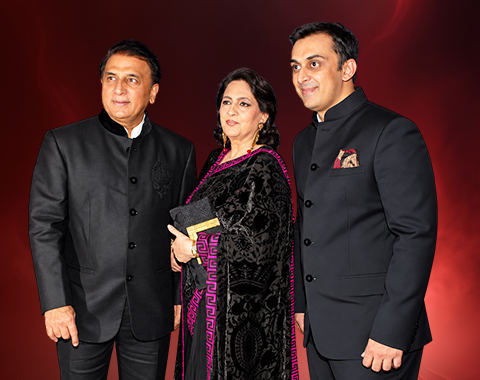
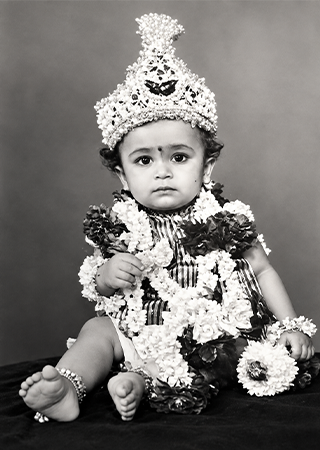
When one thinks of Sunil Gavaskar’s family, there is no escaping the name of Madhav Mantri, the uncle of Sunil’s mother, who played as an Indian wicket keeper before becoming the selector of Bombay. It was Mantri who led Sunil in the path of proper cricket.
But talk to anyone who knew the household well, and they’ll tell you the real architect of his game wasn’t the famous uncle. Every discussion of Sunil Gavaskar father naturally starts with Manohar Gavaskar, the man who filled the home with cricket talk from morning to night. His mother did something quieter and, honestly, more important. Meenal Gavaskar bowled to her son for hours, day after day, in the narrow gallery of their small flat. There was no room in that space to swing hard. So the boy learned, out of pure necessity, to play straight, to play late, and to hold perfectly still until the ball actually arrived.
One afternoon, he drove a shot straight into his mother’s nose. Blood, a wince, a wipe of the face, and she picked the ball back up and kept bowling. If you’ve ever wondered where his bottomless patience at the crease came from, that gallery gives you the answer far better than any coaching manual could.
Here’s a clean Sunil Gavaskar profile, In this Sunil Gavaskar biography, the kind you can scan in ten seconds flat before diving deeper into this Sunil Gavaskar biography. Most people searching for a Sunil Gavaskar biography online start right here, at the table, before reading the story behind each line.
Detail | Information |
Sunil Gavaskar full name | Sunil Manohar Gavaskar |
Sunil Gavaskar nickname | Sunny, Little Master |
Sunil Gavaskar date of birth | 10 July 1949 |
Sunil Gavaskar age | 77, as of 2026 |
Birthplace | Bombay, now Mumbai, Maharashtra |
Sunil Gavaskar height | Roughly 5 ft 4 in up to 5 ft 5 in |
Batting style | Right-hand bat |
Bowling style | Right-arm medium |
Playing role | Opening batsman |
Test debut | 6 March 1971, against the West Indies |
ODI debut | 13 July 1974, against England |
International career | 1971 to 1987 |
Sunil Gavaskar captaincy | Several stints, late 1970s to mid-1980s |
Sunil Gavaskar retirement year | 1987 |
Hold onto that table. Every single line in it gets its full story as this Sunil Gavaskar biography moves forward.
Cricket never pushed his studies aside, In this Sunil Gavaskar biography, and his studies never pushed cricket aside either. His Sunil Gavaskar education ran through St. Xavier’s High School in Mumbai, then St. Xavier’s College. He gave both his full attention, somehow, at seventeen years old, a rare thing for anyone that age.
In 1966, the country named him its best schoolboy cricketer. Not a small honour for a teenager still finishing his exams.
What actually caught the attention of coaches wasn’t flashy strokeplay. It was his stillness at the crease. Most schoolboys grow restless within twenty minutes of batting. He didn’t. Coaches sharpened his back-foot game and trained his eye to read length early, the exact skill that keeps a batsman alive against real pace years down the line. By the time school cricket gave way to trials for bigger teams, nobody around Bombay called him promising anymore. They called him ready.
No Sunil Gavaskar biography would be complete. In this Sunil Gavaskar biography, without this part, because it’s where the story almost stalled. Bombay’s domestic cricket scene in the 1960s chewed up talented young batsmen for breakfast. Dozens fought for eleven spots, and talent alone rarely bought you a game. He made his first-class debut in the 1966-67 season for the Vazir Sultan Colts XI in the Moin-ud-Dowlah Gold Cup. Then Bombay’s Ranji squad simply parked him on the bench. Two full seasons, no match, just waiting his turn.
His actual Ranji debut came in 1968-69 against Karnataka, and he made a duck. The whispers started fast. His uncle sat on the selection committee, people muttered, so of course the boy got picked. Favouritism, they said.
He answered with the only tool he had: his bat. His very next innings brought 114 against Rajasthan. Two more centuries followed in a hurry, and the whispers died out almost as quickly as they’d started. Selectors noticed, and when the touring party for the West Indies came together for 1970-71, his name sat right there on the list.
He missed the first Test In this Sunil Gavaskar biography, of that Caribbean tour, sidelined by an infected nail. Once he finally walked out, though, nobody could shift him. He scored 774 runs across the series at an average of 154.80. Read that number twice. It isn’t a typo. Garfield Sobers and Lance Gibbs, both future Hall of Famers, bowled at him during that tour and couldn’t find a way through. No batsman had ever opened a career quite like that, and at just twenty-one, he went home a household name.
His Sunil Gavaskar cricket career, from that point forward, became one long, quiet argument with the fastest bowlers alive. West Indies fielded four terrifying quicks. Australia brought real pace of its own. Every time, he walked out first, took the shine off the new ball, and simply stayed there.
His average against West Indies alone reached 65.45, a genuinely remarkable number against that particular attack. To be fair, not every hundred came against all four of their fearsome quicks bowling together. Even accounting for that, the number still stuns.
His ODI career started later, on 13 July 1974 against England, at a time when the fifty-over format itself had barely turned three years old. His job never changed across formats. Get in. Get comfortable. Bat long. Let the rest of the order build on what he’d already laid down.
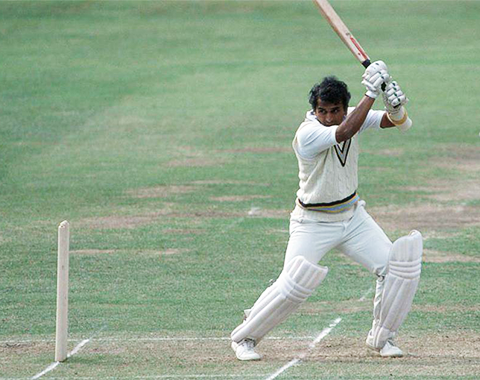
A proper Sunil Gavaskar biography must take its time In this Sunil Gavaskar biography, to stop here, for these are the key Sunil Gavaskar career statistics in the field of Test cricket. 125 games from 1971 until 1987. 10,122 runs at an average of 51.12. 34 hundreds. 45 fifties. Highest individual score 236 not out.
There are two records concealed within these figures, and they must have their own space in the limelight. He was the first ever batsman in the history of Test cricket to cross the milestone of 10,000 runs. He was also the first one to touch 30 hundreds. Not the first Indian to do either. The first cricketer from any country, full stop.
Prior to Gavaskar’s advent, bowling attacks from touring teams always believed themselves to have an edge on quick overseas pitches against Indian batsmen. His statistics proved the contrary through long innings, and sixteen years of being at the pinnacle gave the opposition bowlers enough generations to learn about his game and discover a weak link, but they rarely found any.
With a change in format, In this Sunil Gavaskar biography, there will come a sweet story of Sunil Gavaskar’s career in the ODI format. Sunil Gavaskar participated in 108 ODIs in which he scored 3,092 runs. However, the highest he managed to score was 103 not out, and interestingly, it is his first and only ODI hundred. This happened to him during a very appropriate time when he took part in the World Cup in 1987 against New Zealand in Nagpur.
One-day cricket in the 1970s rewarded survival far more than aggression. Two hundred runs often won matches outright. Fielding restrictions barely existed the way they do now. His strike rate looks conservative today, sure, but it made complete sense for the era he actually played in. He built the foundation. Somebody else took the risks after him.
Curious about Sunil Gavaskar centuries specifically? In this Sunil Gavaskar biography, Thirty-four in Tests, one in ODIs, 35 international hundreds altogether. His Test century tally stood as the world record for years, until Sachin Tendulkar eventually passed it. Easy to lose sight of the quality behind those 34 hundreds, though. These weren’t soft runs piled up on flat, tired pitches against exhausted bowlers. Plenty came against genuinely hostile fast bowling, with no helmet, during an era when batsmen barely had any protective gear at all.
His 236 not out against West Indies gets mentioned most often, and rightly so. Batting that long, against that attack, with almost nothing protecting his body, takes a level of focus that’s nearly impossible to teach. Several of his other centuries landed exactly when a series hung in the balance. That pattern is really the point. His reputation rests on delivering hundreds when scoring runs was hardest, not easiest.
In those days, World Cups were not yet the world events that they have become in the later years. His Sunil Gavaskar World Cup record constitutes an important part of this analysis. Sunil Gavaskar participated in three World Cups, his first being in 1975, and the 1979 World Cup did not favour India. Even the fifty-over cricket form of the game had not evolved into what it came to be in later years.
Everything came undone in 1983. He emerged as the elder statesman in a team that stunned the cricketing community after clinching victory at Lord’s with an innings and 43 run win against West Indies in the final. It was Kapil Dev who won the Cup on that day, but he did not do it alone because there were other legends of cricket in that dressing room too. Having a seasoned player on the side who had over ten years of Test experience was highly important.
The Sunil Gavaskar captaincy was not a continuous one, but there were occasions wherein there was a change in captaincy between Sunil Gavaskar and Kapil Dev during the span of the late 1970s to early 1980s. Throughout his career, he served as the captain of India in 47 of his 125 total Test matches.
He was a calm leader who would take decisions after much thought rather than impulsive actions, which suited his personality even though it disappointed fans who expected much more aggression from him. Under his leadership, India won the 1984 Asia Cup and 1985 World Championship of Cricket played in Australia.
Captaining a side while opening the batting yourself ranks among cricket’s toughest combinations. One moment you’re setting fields and making tactical calls. Next, you’re padding up to face a brand new ball yourself. He carried both jobs for long stretches without his own scoring ever really slipping, and younger players in the squad leaned on him constantly for guidance, both technical and mental.
What actually sits inside the Sunil Gavaskar achievements list? Start with the obvious ones. First man to 10,000 test runs. First to reach 30 Test centuries. Record holder for most Test hundreds by anyone for a good number of years.
Numbers alone don’t capture everything he gave the game, though. His deeper Sunil Gavaskar achievements include something almost impossible to measure with statistics: a genuine shift in how touring bowling attacks approached an Indian top order. Before him, they fancied their chances. After him, they had to actually plan around it. This is the reason why his name repeatedly comes up when one speaks of the lore about the legends of cricket, year after year.
Go down the Sunil Gavaskar awards list and you will see something unique. This list spans four decades, something that rarely happens to a retired sportsman. He was conferred the Arjuna Award in 1975 in the very early stages of his career, signifying his meteoric rise. In 1980, he received not one but two prestigious awards – Wisden Cricketer of the Year and the Padma Bhushan.
image
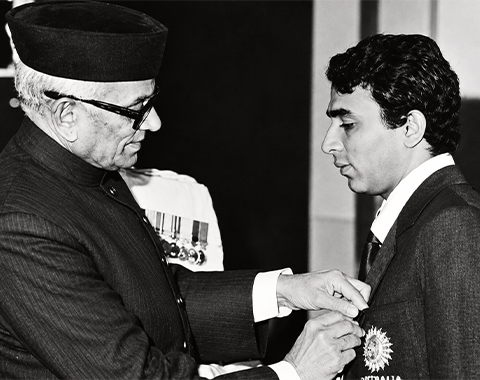
The ICC honored Sunil Gavaskar as one of the very few to be elected into their Cricket Hall of Fame in 2009. The cap was received three years later in Dubai in February 2012 by his former teammate and captain Kapil Dev. The same year, he was honored with the CK Nayudu Lifetime Achievement Award by the BCCI.
What is remarkable about this Sunil Gavaskar awards list is not just the awards themselves. It’s the timeline. Recognition kept arriving well into his sixties, decades after his last innings, something that simply doesn’t happen to most retired athletes.
Younger players were starting. In this Sunil Gavaskar biography, he challenged for his place by the mid-1980s, and he knew it. His final Test came in March 1987 against Pakistan at Bangalore, on a wicket that really did disintegrate towards the end. He retired unbeaten with 96 runs to his name. This is often described by people who saw him play as one of his best innings ever because of the condition of that wicket.
The year when Sunil Gavaskar retired was 1987, which is precisely sixteen years from the time he played his first match in the Caribbean. There were a few years during which India was desperately looking for someone to occupy his position in the batting order. No one was surprised by his retirement. But there indeed are many who felt sad about his retirement.
His retirement was hardly five minutes old when he switched to being a commentator, and he has stuck to that role all through. His approach to broadcasting is quite similar to his batting approach too. He observes carefully, speaks his mind bluntly, and never uses the general diplomatic terms used by others who commentate on the sport. The same fans who watched him batting as youngsters ended up knowing the technical aspects of the sport through his comments years later.
Beyond the commentary box, he’s written columns, taken on the occasional administrative role, and shown up at more cricket grounds than anyone could realistically count. This fits neatly into how fans follow cricket today.
Someone hears him mention a batting average on air, then checks a stats and score platform like Winstrike to see the full record for themselves. And it works the other way too. A fan scrolling through player profiles on Winstrike will often turn straight to his commentary to actually understand what those numbers meant on the day, against that particular attack.
What made him so hard to dismiss? His defence, first and foremost. Barely any gap ever opened between bat and pad, leaving fast bowlers almost nothing to aim at. His footwork therefore moved early rather than late, getting his whole body into line with the ball instead of reaching or stretching at it, exactly the habit that stops a batsman from being rushed by real pace.
Then there was the concentration. He could occupy the crease for four or five hours without the mental lapse that eventually gets most players out. Coaches across the country started teaching his method to young batsmen almost immediately. Play straight. Leave the ball well outside off stump.
Don’t chase width in the first hour of an innings. You certainly can trace his influence directly through generation after generation of Indian openers. Some batted more aggressively by nature, sure, but the basic blueprint for opening the batting in Test cricket came largely from watching him do it first.
Say those four names to any cricket fan and they’ll wince a little. Michael Holding. Andy Roberts. Joel Garner. Malcolm Marshall. Possibly the scariest fast bowler combination ever created in the history of cricket in one side, and Gavaskar averaged 65.45 runs per match against this combination for ten years of play. It was due to his repeated success against the very combination that decided his status among legends of cricket in India well before he retired.
Matches against Pakistan in general carried their own particular heat, bigger crowds, heavier scrutiny on every single ball he faced. Australia tested him differently, with extra bounce and pace on quicker home pitches. He handled all of it. Playing against the best bowlers of your generation, time and time again, for more than ten years, is precisely the challenge that distinguishes the true greats from those who will be forgotten after just a couple of years.
Every good Sunil Gavaskar biography eventually has to zoom out. Step back and look at the complete Sunil Gavaskar profile laid out together, 125 Tests, 10,122 runs and 34 centuries. First man to 10,000, plus 108 ODIs alongside 3,092 runs. Captain in 47 Tests. A World Cup winner’s medal from 1983.
His influence didn’t stop the day he retired in 1987. Nearly forty years of commentary means he’s personally shaped how two or three generations of fans understand batting technique. Very few cricketers manage a second act that lasts this long. Even fewer manage one that people take just as seriously as the first.
This is the part of any Sunil Gavaskar biography where the pieces finally click into place. Put the whole journey together and the shape becomes clear. A cricket-obsessed household. A mother bowling for hours in a narrow gallery. School days are likewise balanced carefully against cricket practice. A duck on Ranji debut, answered almost immediately by three centuries in a row.
Then came sixteen years of opening the batting against the fastest, most hostile attacks the sport has ever produced. After that, the captaincy years, the 1984 Asia Cup, the 1983 World Cup triumph, and a retirement in 1987 that closed one of the most remarkable careers cricket has seen. Then, naturally, the microphone, and everything that followed it.
It is only fair to say that he was certainly not the most exciting batsman to watch on the field, but the truth is that he was one of the most difficult players to remove from the game. And it is for this reason, more than any other, that he is remembered in the folklore of cricket today.
So why does this particular Sunil Gavaskar biography keep circling back to the word legend, again and again? Start with the records. First to 10,000 Test runs. First to 30 centuries. Record holder for most Test hundreds by anyone, for a genuinely long stretch of cricket history.
Something bigger sits underneath all of that, though. Batsmen from the subcontinent simply weren’t expected to handle hostile pace bowling overseas back then, and he handled it, comfortably, for sixteen straight years. He led the national side to real trophies.
And then he went on to spend decades trying to explain the entire game to everyone just as clearly as he used to explain the art of batting. It is longevity, world records, genuine leadership, on the whole and influence that point toward the same direction.
All these factors in fact are responsible for him being one of the legends of cricket in India, and also the yardstick against which other openers are measured.
He’s a former Indian opening batsman and captain, widely regarded as one of the greatest openers the sport has ever produced. These days, he works as a cricket commentator.
His Sunil Gavaskar full name is Sunil Manohar Gavaskar.
10 July 1949, in Bombay, now Mumbai.
As of 2026, he’s 77 years old.
Somewhere between 5 ft 4 in and 5 ft 5 in, depending on which source you check.
Sunny at home, the Little Master to the rest of the world.
Manohar Gavaskar raised him. His mother, Meenal, was the sister of former India wicketkeeper Madhav Mantri.
He studied at St. Xavier’s High School and later St. Xavier’s College, both in Mumbai.
Thirty-four in Test cricket, one in ODIs, 35 international centuries overall.
He became the first batsman to reach 10,000 Test runs and the first to score 30 Test centuries. He also captained India to the 1984 Asia Cup title and played in the squad that won the 1983 World Cup.
In 1987. His last Test came in March, his last ODI in November of that year.
He played 108 ODIs for 3,092 runs, with one century, an unbeaten 103 at the 1987 World Cup against New Zealand.
In Tests: 125 matches, 10,122 runs at an average of 51.12, 34 centuries, 45 half-centuries, and a highest score of 236 not out.
The Arjuna Award in 1975, the Padma Bhushan and Wisden Cricketer of the Year in 1980, ICC Hall of Fame selection in 2009, and the C.K. Nayudu Lifetime Achievement Award in 2012.
Becoming the first man to 10,000 Test runs, and for handling fearsome West Indian fast bowling without ever flinching.
From a cramped corridor In this Sunil Gavaskar biography, in a tiny Bombay apartment all the way to the top of the Test run standings, this Sunil Gavaskar biography chronicles a career that was all about patience and not power. In some ways, it is a much more compelling story as a result.
His stats stand up to whatever analysis you care to apply to them. The same can be said of his technique as well. Sunil Gavaskar provided sixteen years of stability to Indian cricket at the top of the order, led his countrymen on a winning streak as captain, and then spent forty years teaching the game to those who never saw him bat live.
Look up his statistics now on an online database such as Winstrike and you will see that his name is just as high up as always. After all this Sunil Gavaskar biography has been through, there couldn’t be a better spot for it to be at.