Slow Over Rate Rules IPL 2026: What Iyer’s Fine Really Means for PBKS
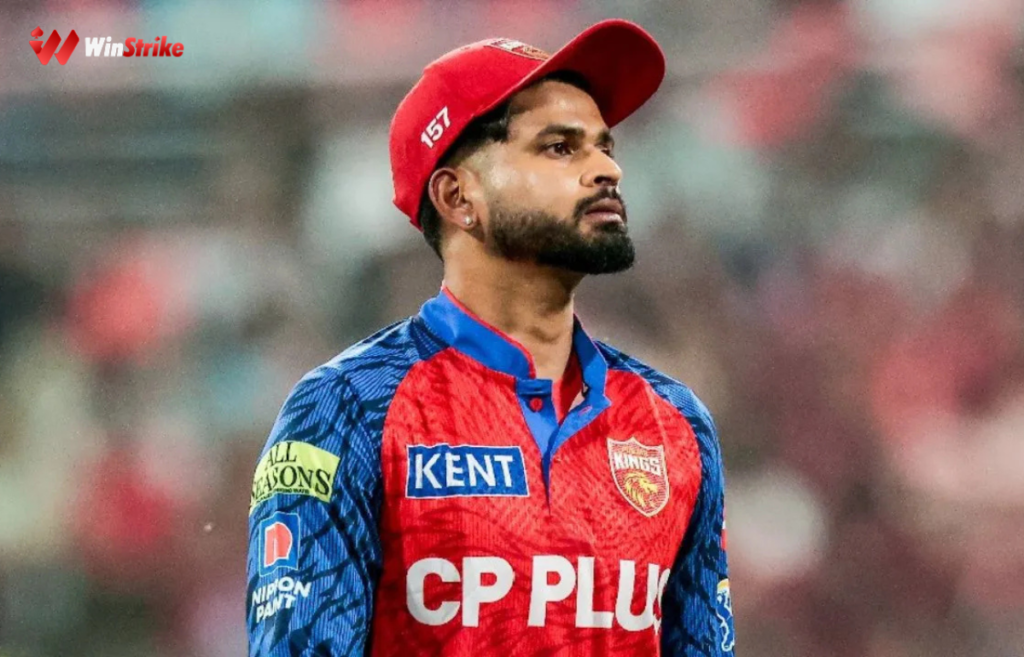
Win the match. Pay the fine. Walk away with a warning nobody can afford to ignore. And this is what PBKS faced yesterday, on the 3rd of April, in Chennai’s land. Slow over rate rules IPL 2026 came into full effect after PBKS beat CSK in a dominant chase, and Shreyas Iyer walked away ₹24 lakh lighter.
Winstrike addresses the complete story. Moreover, the entire playing XI, including Impact Player Priyansh Arya, received fines alongside their captain. Therefore, a brilliant five-wicket win came packaged with a serious disciplinary consequence that PBKS cannot keep brushing aside.
Slow Over Rate Rules IPL 2026: Breaking Down What Article 2.22 Actually Says
Most fans assume slow over rate penalties mean one thing: a ban. However, that changed before this season even started.
A look at how it is structured now:
- First offence: Captain fined ₹12 lakh. The rest of the playing XI fined ₹6 lakh or 25% of match fee, whichever is lower.
- Second offence: Captain fine doubles to ₹24 lakh. The same structure applies to all other players, including Impact Player.
- Third offence: Captain faces a ₹30 lakh fine. Furthermore, in-game fielding limitations will be there; fewer fielders allowed outside the circle during the final over.
- Demerit points: Stay on record for 36 months.
- No automatic ban: Since IPL 2025, the one-match suspension rule no longer applies automatically after three offences.
- Therefore, captains cannot simply accept a ban and reset. The consequences now compound financially and operationally with every breach.
What Most Fans Get Wrong About IPL Over-Rate Penalties
The old rule felt simple. Three strikes and the captain sat out one game. However, that system ended before the 2025 season. Furthermore, many fans still operate on that assumption, which is exactly why Shreyas Iyer’s second fine caught people off guard.
The new slow over rate rules IPL 2026 introduced a more layered approach. Moreover, fielding restrictions in death overs hurt teams in ways a fine simply does not. Consider what losing a fielder outside the circle in the final over means, specifically:
- Batting teams get easier scoring opportunities in the most critical phase of any match
- Bowlers lose their defensive field settings exactly when they need them most
- A five or ten-run swing in the final over directly changes match results at this level
Consequently, the third offence is not just expensive; it is tactically dangerous.
Shreyas Iyer Fined IPL 2026: But The Batting Style Holds a Different Story
Leaving the fine alone, the reason for the penalty aside, Shreyas Iyer batting alone would make a headline against CSK. Moreover, PBKS pursued 210 within 18.4 overs, and it never seemed to be in its way after the powerplay.
- Priyansh Arya -POM, 39 off 11 balls, strike rate 354.55, three fours and four sixes up to the fifth over when he was dismissed by Matt Henry.
- Shreyas Iyer 50/29 balls, 172.41 strike rate, 4 fours, 3 sixes, out in the 17th over
- Outcome – won the match at 18.4 overs, it was a masterpiece with the first ball to the final one.
In addition, it is not easy to pursue 210 at Chepauk by any team. Moreover, PBKS hit it comfortably – and that says something true about the batting depth this franchise will be carrying in IPL 2026.
Priyansh Arya Got the Award and the Fine on the Same Night
Here is the part that lands differently when you think about it. Furthermore, Priyansh Arya walked away as POM and also walked away with a fine in his pocket. Moreover, as the Impact Player, Article 2.22 covers him fully; there is no exemption for substitute or impact roles under the current slow over rate rules IPL 2026.
39 off 11 balls. Strike rate of 354.55. Three fours. Four sixes. Dismissed in the fifth over. However, the damage was already done before CSK could react. Consequently, Arya’s knock effectively set the tone for an entire chase, and still cost him financially because of what happened with the over-rate clock.
What a Third Offence Looks Like for PBKS This Season
PBKS have at least twelve league games remaining. Furthermore, another slow over rate breach puts Iyer at ₹30 lakh and triggers the fielding restriction that actually changes match outcomes. Moreover, aggressive teams like PBKS naturally slow down bowling changes, batting rotations, and strategic timeouts, all of which eat into the clock.
Three things PBKS must fix immediately:
- Bowlers need to start their run-ups faster between deliveries in every single over
- Fielding changes between overs needs better coordination from the captain and support staff
- Time management during strategic timeouts must be tighter; every second counts under the current system
Consequently, this is not just a fine problem; it is a process problem. Therefore, the coaching staff and Iyer need to treat over-rate discipline the same way they treat powerplay strategy.
The Real Cost of Slow Over Rates Goes Beyond the Fine
Winstrike data and IPL analysts both point to the same conclusion. Moreover, fielding limits in death overs have had direct impact on the outcome of matches in the past seasons. Furthermore, a batting-heavy team like PBKS is dependent on the tight bowling at the death stage to protect totals. Therefore, during the final overs, if a fielder is lost, it becomes a major drawback. Above all, this season is not even two weeks old, yet Shreyas Iyer has been fined IPL 2026 twice.
Conclusion
PBKS beat CSK. Priyansh Arya won POM and Iyer scored a good 50. Furthermore, they also cleverly chased 210 with a good RR. However, slow over rate rules IPL 2026 do not care about match results; only the clock. Moreover, the second fine doubles the first, and the third brings consequences that go well beyond money. Therefore, PBKS carry a brilliant batting lineup and a growing disciplinary problem into the next twelve games. Above all, the team that can chase anything this season cannot afford to hand opponents free runs through fielding restrictions they brought entirely on themselves. Head to Winstrike for more interesting cricket information.
FAQs
- Was it only Iyer who actually got fined, or the whole team have to pay?
The entire 11 who were on the field, especially including Impact Player Priyansh Arya, were fined either ₹6 lakh or 25% of their match fee.
2. If Iyer gets one more slow third over rate offence will he be stopped from playing the season?
No, automatic bans are not there anymore, but the third time as an offence will increase the fine to ₹30 lakh and in-game fielding restrictions that actually affect more than the money.
3. What fielding restriction kicks in after a third slow over rate breach?
Fewer fielders allowed outside the circle in the final over, which directly hands batting teams easier scoring opportunities at the death.
4. How long do demerit points from slow over rate offences stay on record?
Thirty-six months, meaning repeated breaches across seasons can still carry consequences well into future IPL campaigns.